A Real Cinema, Inside Your Fort Worth Home
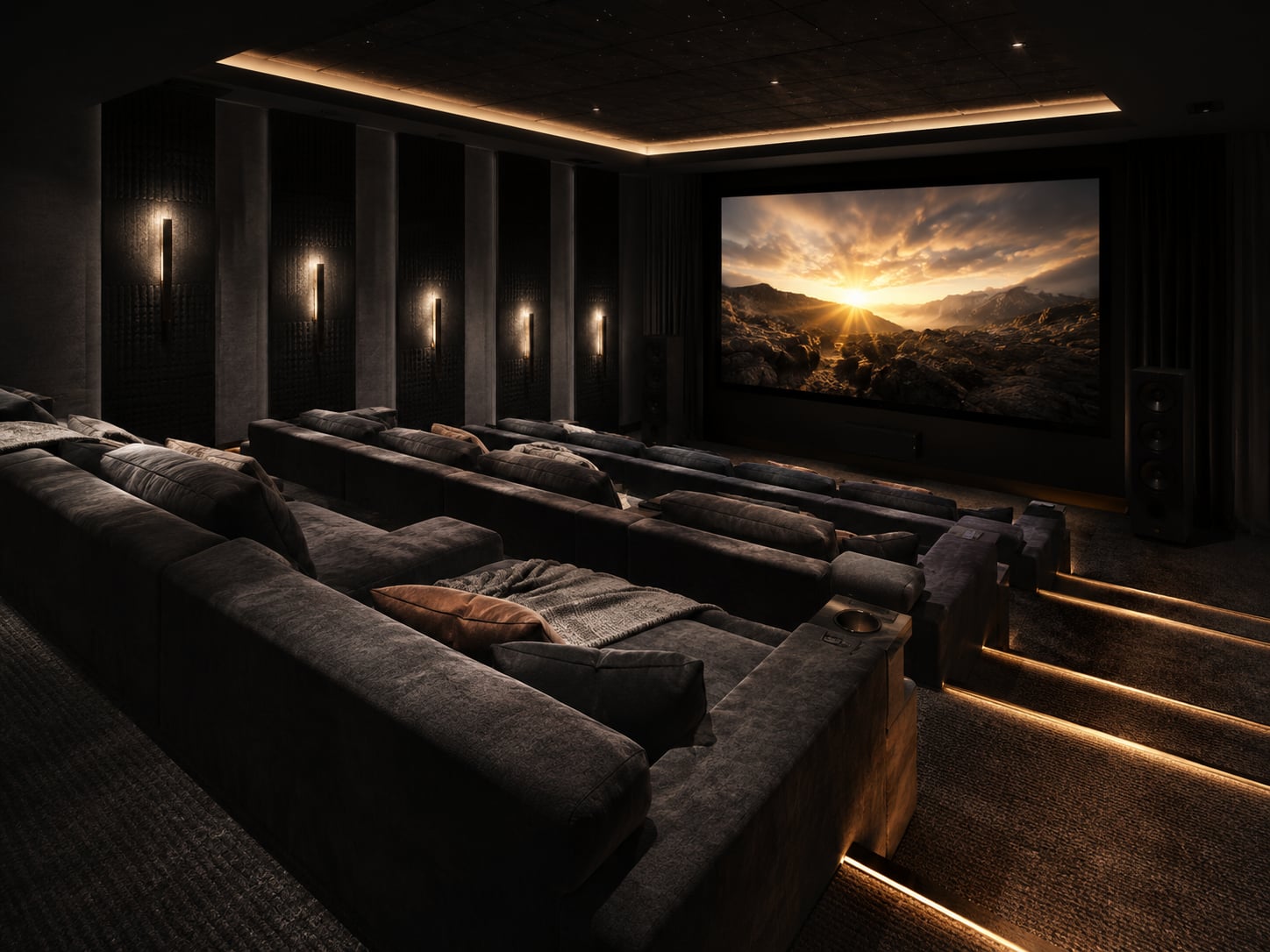
The lights ease down. The screen drops. The first chord of the score arrives in a place behind your shoulder you cannot quite point to. This is what a real theater feels like at home — not a bigger TV, but a different kind of evening. Fort Worth gives us rooms most cities do not. A third-floor ballroom in a century-old Rivercrest estate. A detached casita in Mira Vista that started its life as guest quarters. A bonus room in Clearfork with the dimensions of a small jazz club. We have built inside all of them.
Every theater we build is an acoustic problem and a visual one, and we treat them in that order. Sony or Epson laser projection for the contrast and the color. A TruDefinition screen that the speakers sing right through. Steinway Lyngdorf, L-Acoustics, and JBL Synthesis drivers placed exactly where the model tells us to place them. Then we model your specific room, fabricate the panels, and tame the reflections, the standing waves, the low-frequency resonance that makes most home theaters sound just slightly off. The first showing in that room rewrites what you expect from a screen.
The Frustrations We Hear Most
- A consumer projector that washes out the second a hallway light gets cracked open
- A surround system with bass you can feel in your chest and dialogue you cannot quite hear
- Light leaking through a transom or a recessed can and quietly ruining every dark scene
- A coffee table covered in remotes and a five-step sequence just to start a movie
Who We Help in Fort Worth
- You watch films like the credits matter and you want the room to honor that
- You are converting a Tanglewood or Arlington Heights bonus room into a real cinema, not a glorified family room
- You own in Mira Vista or Montserrat and the theater is its own building with its own front door
- You are building in Clearfork and you want the room sized correctly while it is still studs
- You watch sports the way other people watch opera — and you want the stadium feeling without leaving the house
How We Do It in Fort Worth
Room Evaluation — We measure the room, listen to its noise floor, study the wall it shares with the rest of the house, and find the seat where the movie will feel best.
Theater Design — Equipment chosen for your space, speakers laid out to immersive reference, screen sized to throw distance, and seating planned so every chair gets the same film.
Acoustic Engineering — We model the room in REW software and design absorption and diffusion that addresses your specific modes — the flutter, the resonance, the small things that make most rooms sound almost right.
Construction & Installation — Risers, soffits, panels, racks, mounts, screen wall, every wire — coordinated with your contractor when the work goes structural.
Calibration — ISF video calibration to D65 with full grayscale and CMS work. Audio calibrated by measurement microphone with Dirac or room correction. The room is then quietly correct.
One-Touch Experience — One button. Lights drop. Screen drops. Projector wakes. Audio mode lands where it should. Streaming queues up. No remotes, no fumbling.
The Questions People Actually Ask.
Can you build a real theater inside an older Rivercrest or Westover Hills home?
Yes, and the older houses are often the most exciting rooms to work in. Big upper floors. Old basements. Strange, beautiful proportions. We have turned a third-floor servant's quarters in a Rivercrest estate into a 7.2.4 immersive room without changing a single original exterior detail. The house stayed the house.
Media room or dedicated theater — which one is mine?
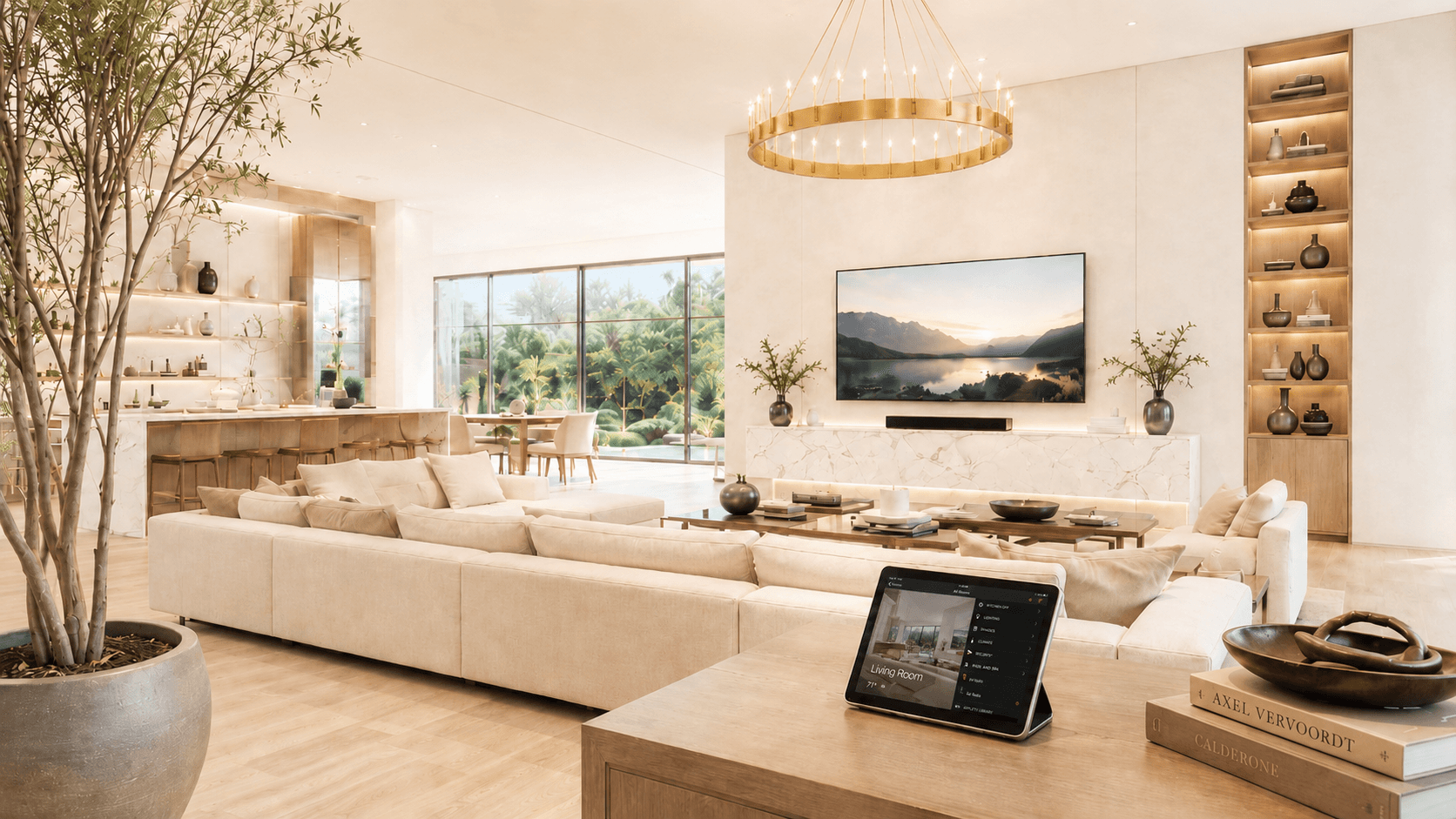
A media room is the family room with serious sound and a great big screen, designed for casual evenings with some lamplight. A dedicated theater is one room with one job — full light control, acoustic treatment, a long-throw laser projector, an acoustically transparent screen, and seats arranged the way they are at the cinema. Tanglewood and Arlington Heights families usually go media room. Mira Vista and Montserrat estates have the square footage for a true theater.
How do you keep the rest of the house from hearing the movie?
Decoupled walls, double-layer drywall with Green Glue, solid-core doors with acoustic seals, and HVAC that has been quieted from the inside. We aim for STC 55 or better, which means a movie at reference level barely brushes the next room. On Fort Worth homes where the theater shares a wall with a bedroom or living space, this is not optional, and it usually adds five to ten percent to the budget.
Projector or a really big TV?
For a room with full light control and a screen above 100 inches, a Sony or Epson laser will always feel more like the cinema. For a media room with daylight and a screen under 85 inches, a great OLED or MicroLED is often the better answer. We will tell you which one is yours, and we will let you see the difference in person before you decide.