01
Choose the Room's Role
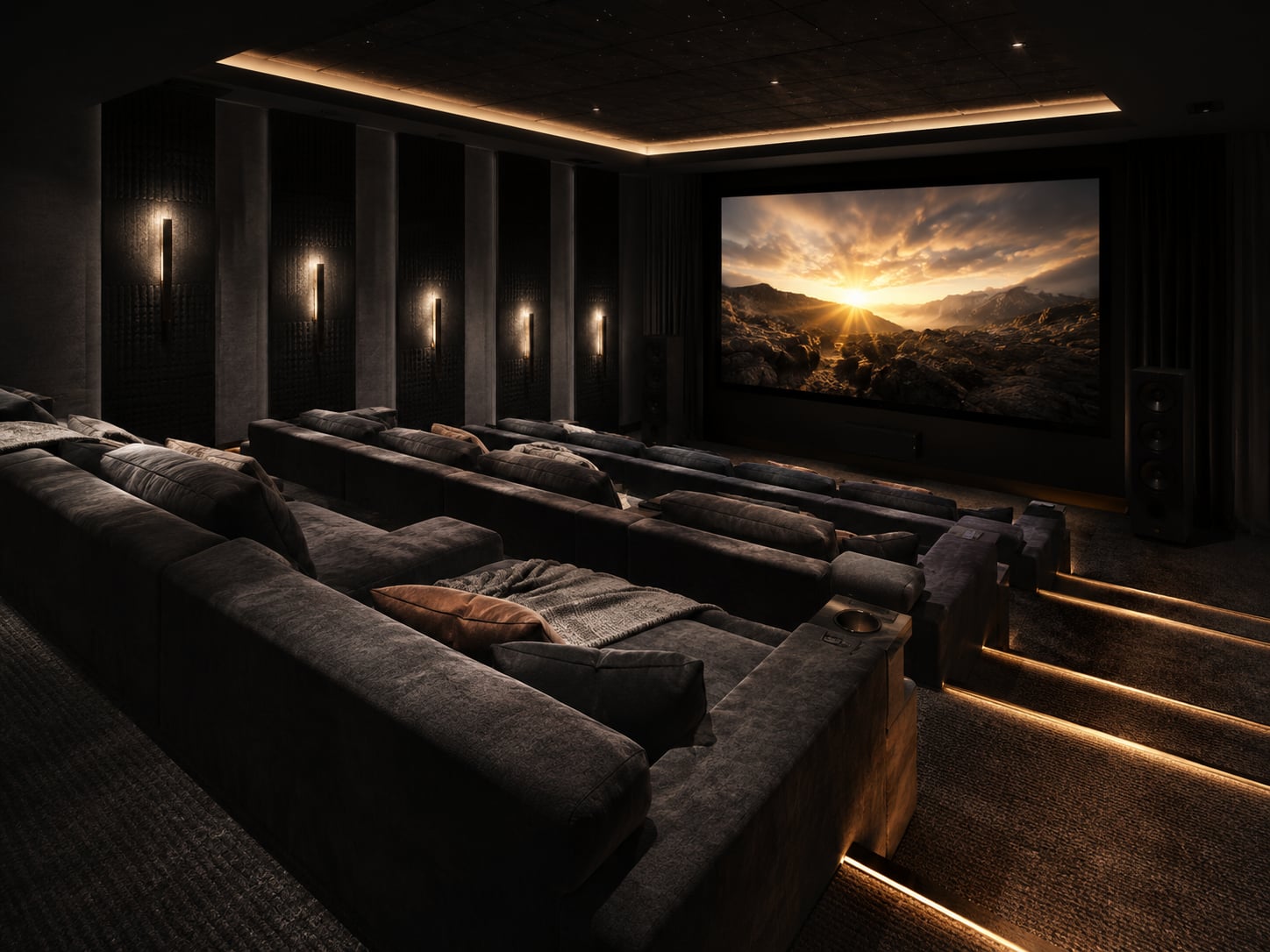
Decide whether this is a light-controlled theater, a shared media room or a hybrid. Seating, windows, daily uses and the desired level of sound isolation shape the design before any projector or TV is chosen.

Private cinemas and media rooms engineered for the space.
Begin with the room and how you watch: screen and seat positions, ambient light, sound isolation, speaker placement, equipment access, and simple control.
Dedicated Theater or Everyday Media Room?
A dedicated cinema can prioritize controlled light, seating and immersive sound. A media room may need to work for sports, games and everyday television as well as movies. The right system starts with room dimensions, viewing distance, windows, seating positions and the way the household will use the space.
TruDefinition coordinates screen and display selection, speaker layout, acoustic treatment, lighting, control and calibration. Room design comes before equipment selection: a projector that suits a dark cinema may not be the right answer for a bright multipurpose room. Bring plans or room measurements and a list of the sources you want to watch.
01
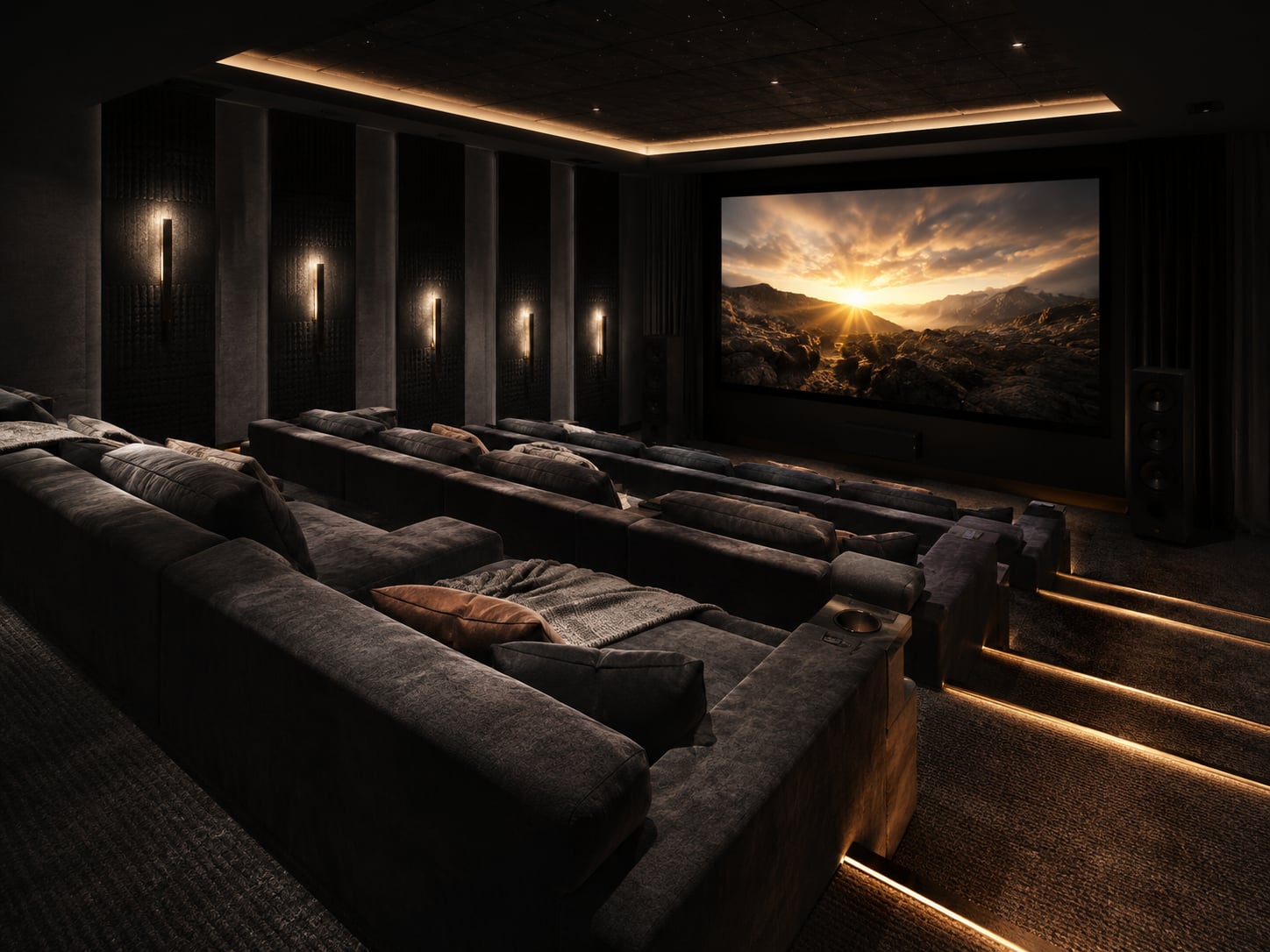
Decide whether this is a light-controlled theater, a shared media room or a hybrid. Seating, windows, daily uses and the desired level of sound isolation shape the design before any projector or TV is chosen.
02
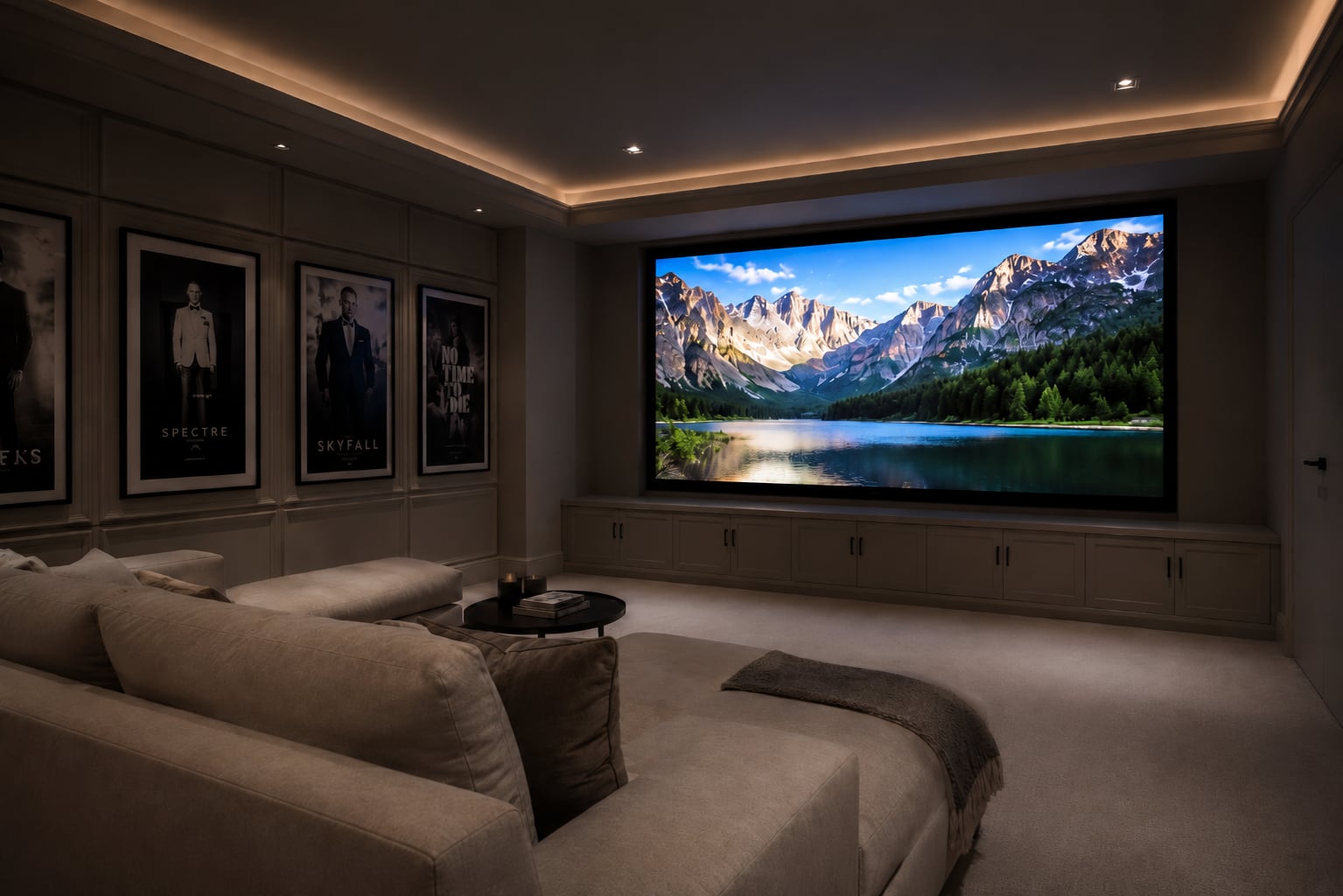
Map screen height and viewing distance, speaker positions and potential obstructions. The room geometry and seat locations guide display size, surround layout and whether acoustic treatment is needed.
03
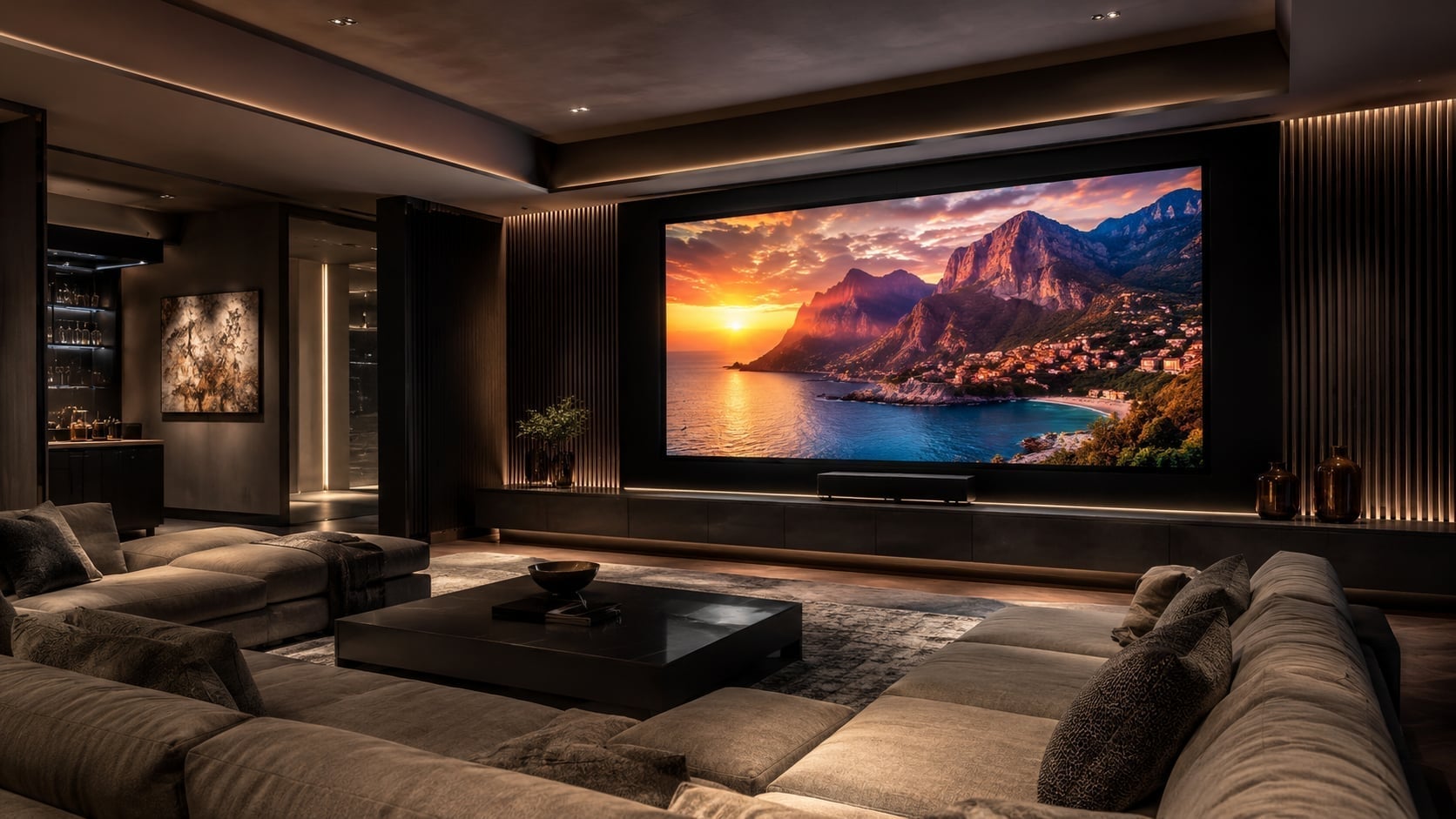
Plan source switching, lighting scenes, shades and volume control together. A walkthrough should verify that each household member can start a movie, use everyday TV and recover from a changed input without a stack of remotes.
Describe the kind of evening you want. We'll build the room around it.
01
For a new room, coordinate framing, power, cable paths, ventilation, light control and equipment location before finishes go in. For a finished room, inspect wall access and practical mounting positions before specifying concealed wiring or speakers.
The installation plan should show screen and seating positions, speaker and display locations, network connections, control points and access to service the equipment. Acoustic treatment and isolation are separate choices with different construction implications.
02
The main variables are room construction, display or projection choice, seating, speaker count, acoustic work, lighting control, equipment storage and wiring access. A bright living room and a purpose-built dark cinema can require very different approaches.
Compare bids by the actual room and functions included: construction and electrical coordination, equipment, installation, programming, calibration, training and any future support. Ask what is excluded before comparing totals.
03
After installation, verify the picture and sound from the intended seats and viewing conditions. Check dialogue clarity, source switching, lighting scenes and everyday controls with the people who will use the room.
Keep a documented equipment list and confirm warranty and support terms. A future recalibration or upgrade can be planned as needed; do not promise a specific annual return visit without a service agreement.
The Details That Matter
A room built for one purpose: the moment the lights fall.
Explore →The luxury movie library — reference-quality films, ready in seconds.
Explore →Clean, regulated power — the reason a reference theater sounds the way it should.
Explore →Friday night football. Sunday afternoon movie. Same room, two different worlds.
Explore →Light pulled from a beam. Pictures that breathe.
Explore →The reason a great theater never sounds like a room.
Explore →You sink in. The film begins. Three hours feel like twenty minutes.
Explore →