01
Independent Rooms or Shared Music
Decide which rooms should play together and which need their own source and volume. The number of independent zones helps determine amplification, source connections, and the control system.

Music everywhere, speakers nowhere.
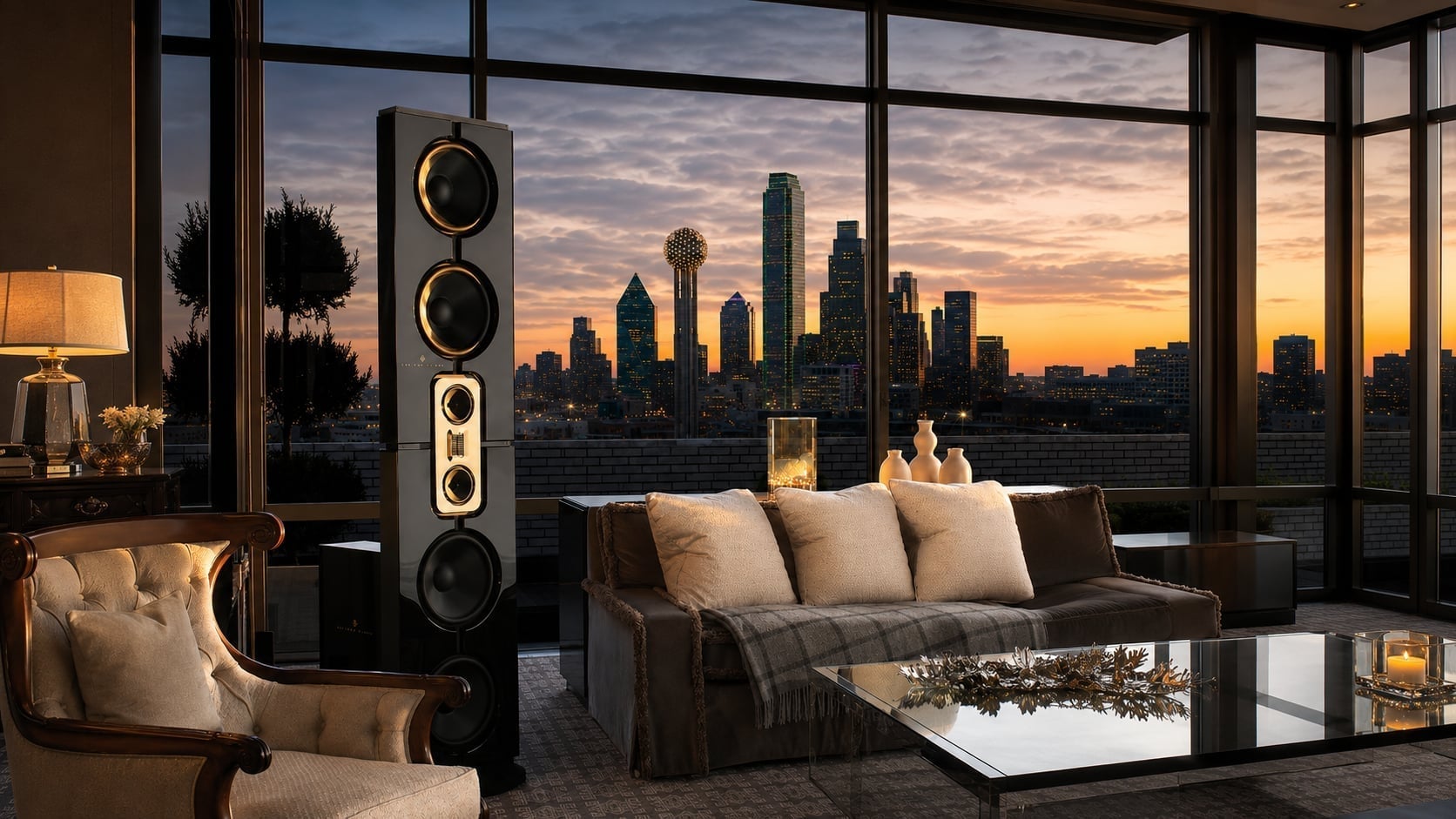
distributed audio that makes the room sing. Music everywhere, speakers nowhere. Steinway Lyngdorf, L-Acoustics, JBL Synthesis.
Whole-Home Audio Design and Installation in Dallas–Fort Worth
A whole-home audio system lets you choose music and volume for different parts of the house. Start with where you listen: background music in the kitchen, a dedicated listening room, or sound across the patio. TruDefinition designs and installs home audio around those uses, the room layout, and the controls you want to use every day.
Plan the zones before choosing the speakers. A zone is an area with its own audio control; several speakers can share one zone. Rooms that need different music or independent volume should be identified early, along with streaming services, TV sound, and equipment you hope to keep. This gives an installation proposal a clear scope instead of just a speaker count.
01
Decide which rooms should play together and which need their own source and volume. The number of independent zones helps determine amplification, source connections, and the control system.
02
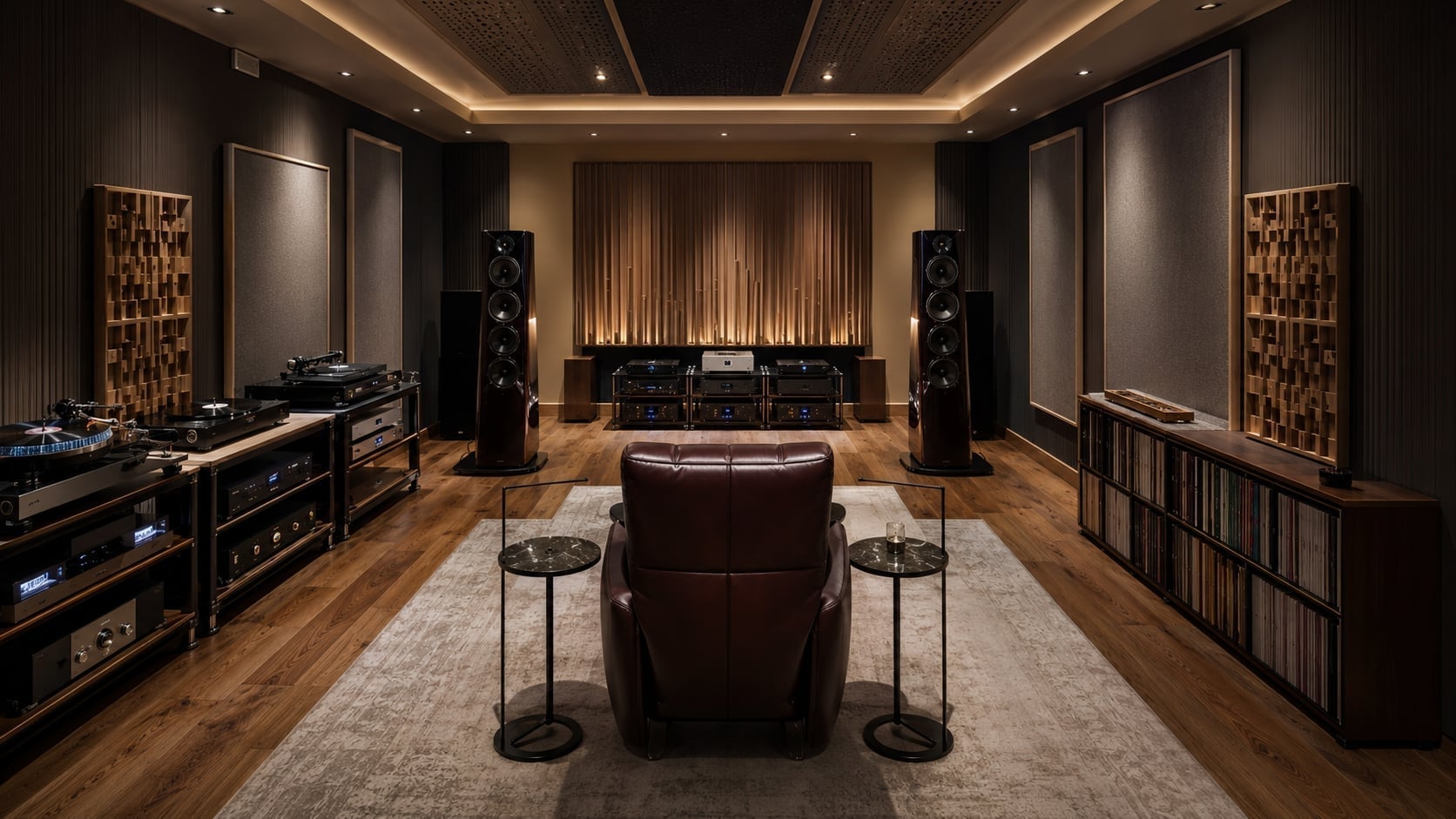
A focused listening seat needs different speaker placement from background music across a large room. Include TV connections and dialogue needs in the plan so music and television work with the intended system.
03
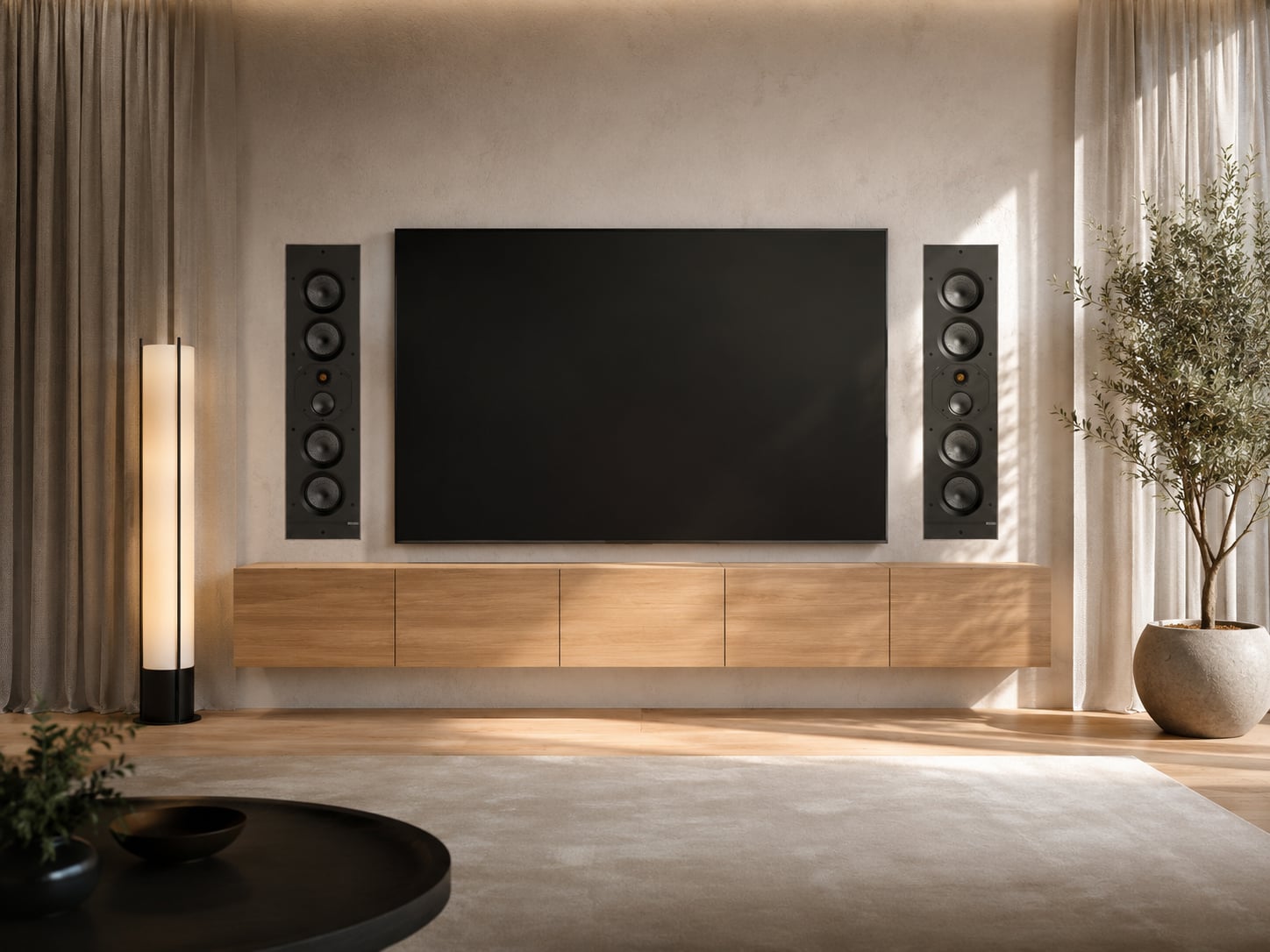
In-ceiling and in-wall speakers reduce visible equipment, while freestanding speakers offer another route for dedicated listening. Placement, ceiling access, furnishings, and the listening area all matter. Outdoor locations need equipment appropriate to their exposure.
Describe the morning, the dinner, the long Sunday. We'll tune the rooms to match.
01
Yes, but the route depends on the building. Attic access, wall construction, existing speaker cable, and the location of the equipment determine where concealed wiring is practical. In a new build or major renovation, deciding speaker and cable locations before walls close gives more installation options.
Existing speakers may be reusable after their condition, wiring, and amplifier requirements are checked. Wireless control does not make passive speakers wireless: they still need a connection to an amplifier. Bring equipment model numbers and photographs of existing connections to the consultation; these help establish what needs investigation.
02
The main drivers are independent zones, speaker and amplifier selection, cable access, equipment storage, and integration with TV or home automation. A few accessible rooms and a finished home with difficult cable routes can require very different work, even with the same speaker count.
Compare proposals by the rooms and functions included. Ask whether wiring, wall repairs, network work, programming, setup, and instruction are included or separate. Streaming subscriptions and future support should also be clear. A useful budget starts with the intended coverage and installation conditions; a universal price per room can miss those differences.
03
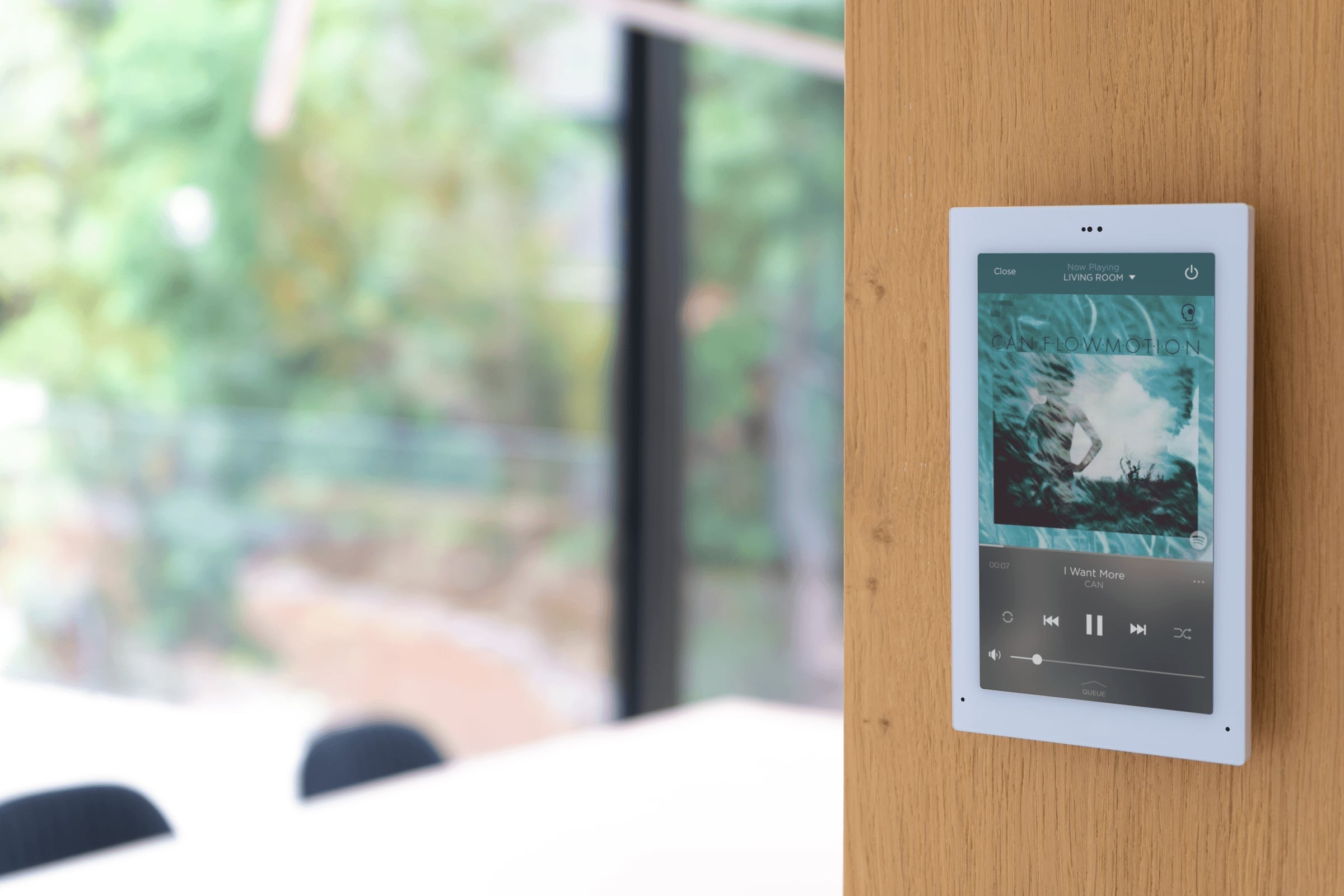
Choose controls that fit the household: an app, a wall keypad, or integration with an existing automation system. Compatibility with music services, voice control, and older equipment depends on the selected products. Savant offers networked audio and scenes, but the specific functions should be documented for your system.
Before accepting the installation, walk through each zone, source selection, volume control, and any TV-audio connection. Confirm who owns the music accounts, how to request help, and which equipment and labor warranties apply. Ask how a future room would be added so expansion is considered before the equipment space fills up.
The Details That Matter
A different song in every room. One soundtrack for the house.
Explore →A chair, a record, and the song the way it was meant to be heard.
Explore →Sound that fills the patio without a single visible box.
Explore →You hear the music. You never see the speakers.
Explore →Jazz in the kitchen. The kids' playlist upstairs. Your favorite album in the study.
Explore →The weight you feel before you hear it.
Explore →