Why the Right Subwoofer Changes Everything
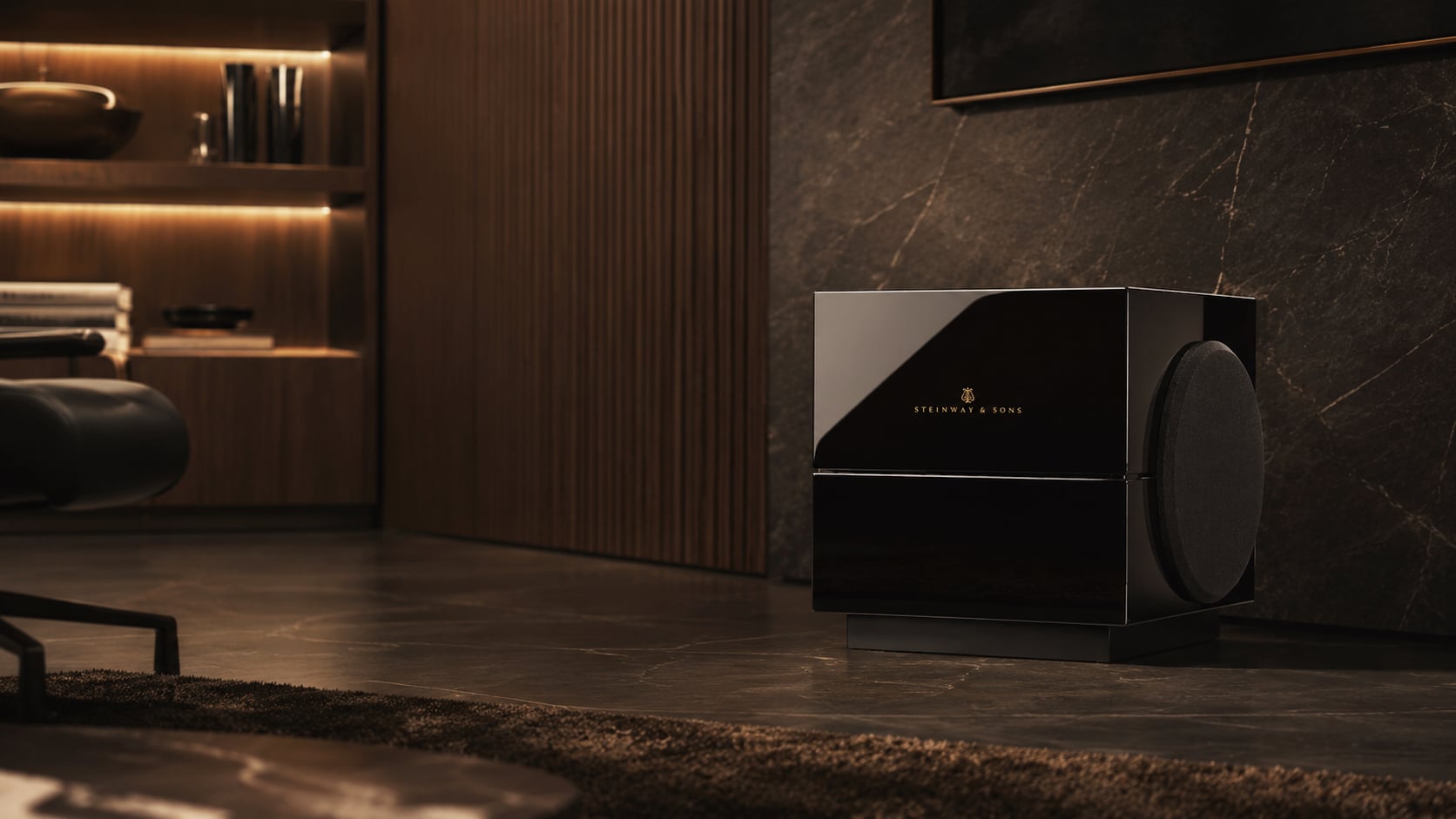
A great audio system without proper bass is a great audio system with a hole in the middle. The kick drum loses its weight. The cello loses its body. The film score loses the moment that should land in your chest. The subwoofer is the part of the system most homeowners under-invest in, and the part professional listeners and serious cinema designers obsess over. We specify and install Steinway Lyngdorf and JBL Synthesis subwoofers across Dallas-Fort Worth homes — the same brands found in reference recording studios and the world's most considered private theaters.
Bass behaves strangely in rooms. Standing waves stack. Cancellations void out the bass in one seat while doubling it in another. A single subwoofer is rarely enough — the right answer in most luxury spaces is a properly placed and properly calibrated multi-subwoofer array, distributed to even out the response across every listening position.
Steinway Lyngdorf and JBL Synthesis Reference-Grade Bass
Steinway Lyngdorf subwoofers carry the brand's patented room correction, which actively measures and corrects for the room's acoustic anomalies in real time. You hear the bass the engineer mastered, not the bass your room imposes. For dedicated listening rooms and reference theaters, this is the floor that lets the rest of the system finally perform at design intent.
JBL Synthesis subwoofers carry the same engineering DNA as the brand's cinema-grade processors. Massive driver assemblies, sealed and ported enclosures sized for serious output, amplification with the headroom to deliver dynamics without compression. For home theaters that want the chest-impact of a commercial cinema in a private room, JBL Synthesis is the answer.
Placement, Quantity, and Calibration
Where the subwoofer lives in the room matters as much as which subwoofer it is. We measure the room's acoustic response and recommend placement — corner-loaded for maximum output, distributed for evenness, or hidden in custom millwork with engineered porting. For most rooms we recommend two or four subwoofers placed to cancel out room modes and deliver consistent bass at every seat.
Once installed, every system is calibrated with measurement microphones and the appropriate room-correction algorithm. We tune crossover frequency, phase, and level so the subwoofers seamlessly integrate with the main speakers — the listener should never localize the bass to a specific spot in the room. The system should breathe as one.
The Questions People Actually Ask.
How many subwoofers does my room need?
A dedicated theater or serious listening room benefits from at least two — often four — properly placed and calibrated subwoofers. A media room or great room can usually be served well by one well-placed subwoofer with proper room correction. The answer depends on room size, layout, and your performance goals.
Can a subwoofer be hidden?
Yes. We design custom millwork enclosures with engineered porting, in-wall and in-cabinet subwoofer installations, and tuned subwoofer cavities built into the architecture. The bass lives in the room. The driver lives behind the room.
Will a serious subwoofer disturb the rest of the house?
Without isolation, yes — bass travels through structure. For dedicated theaters we engineer the room with decoupled walls, isolation pads, and bass traps so the bass stays in the room. The rest of the house never knows the movie is on.
How do you calibrate subwoofers?
With measurement microphones, room-correction software, and ears. We measure the in-room response at every primary seat, tune crossover and phase to integrate with the main speakers, and verify with film references and music passages. The calibration is what separates a professional install from a consumer setup.