A Dedicated Theater Is Not a Media Room
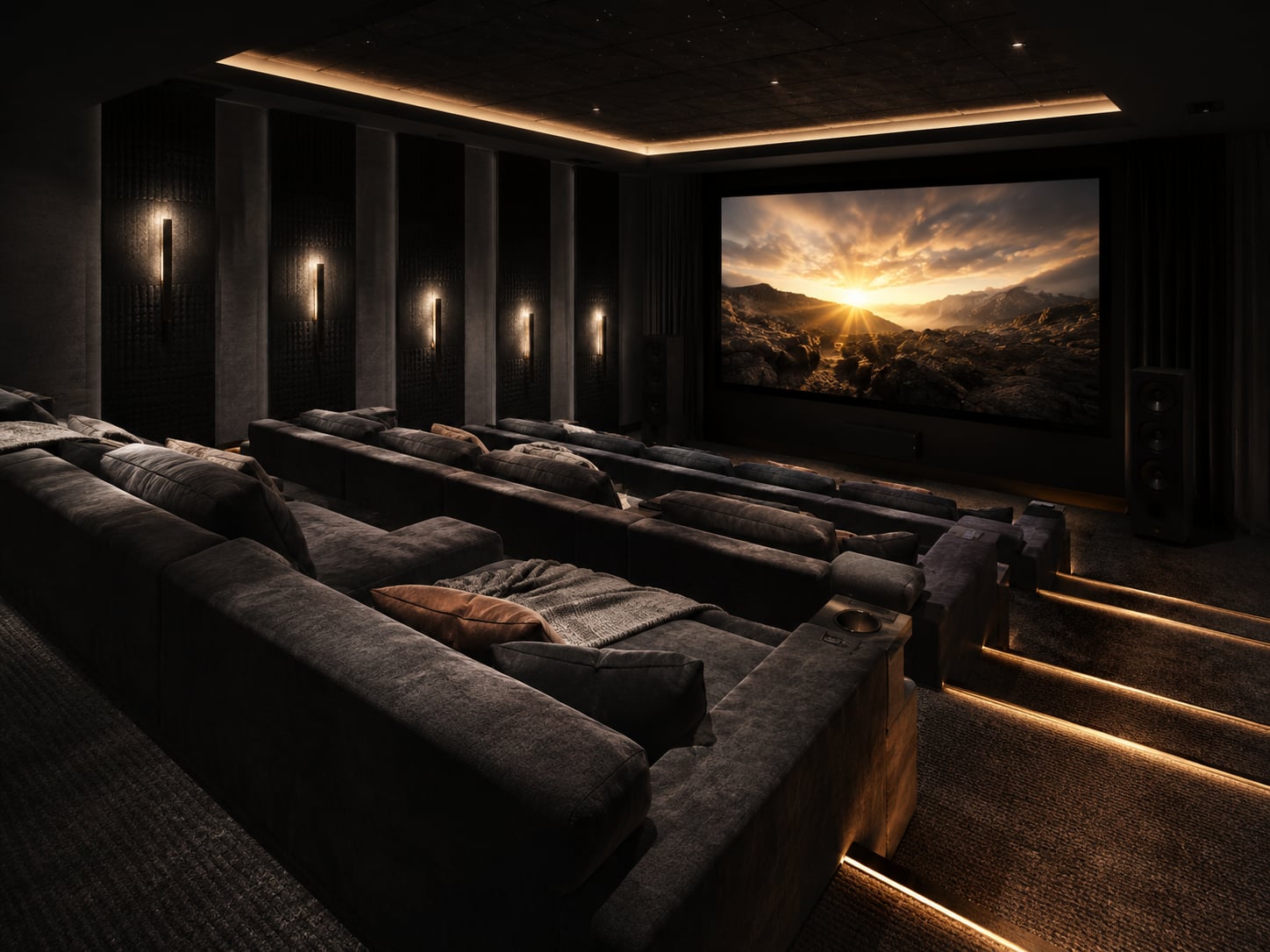
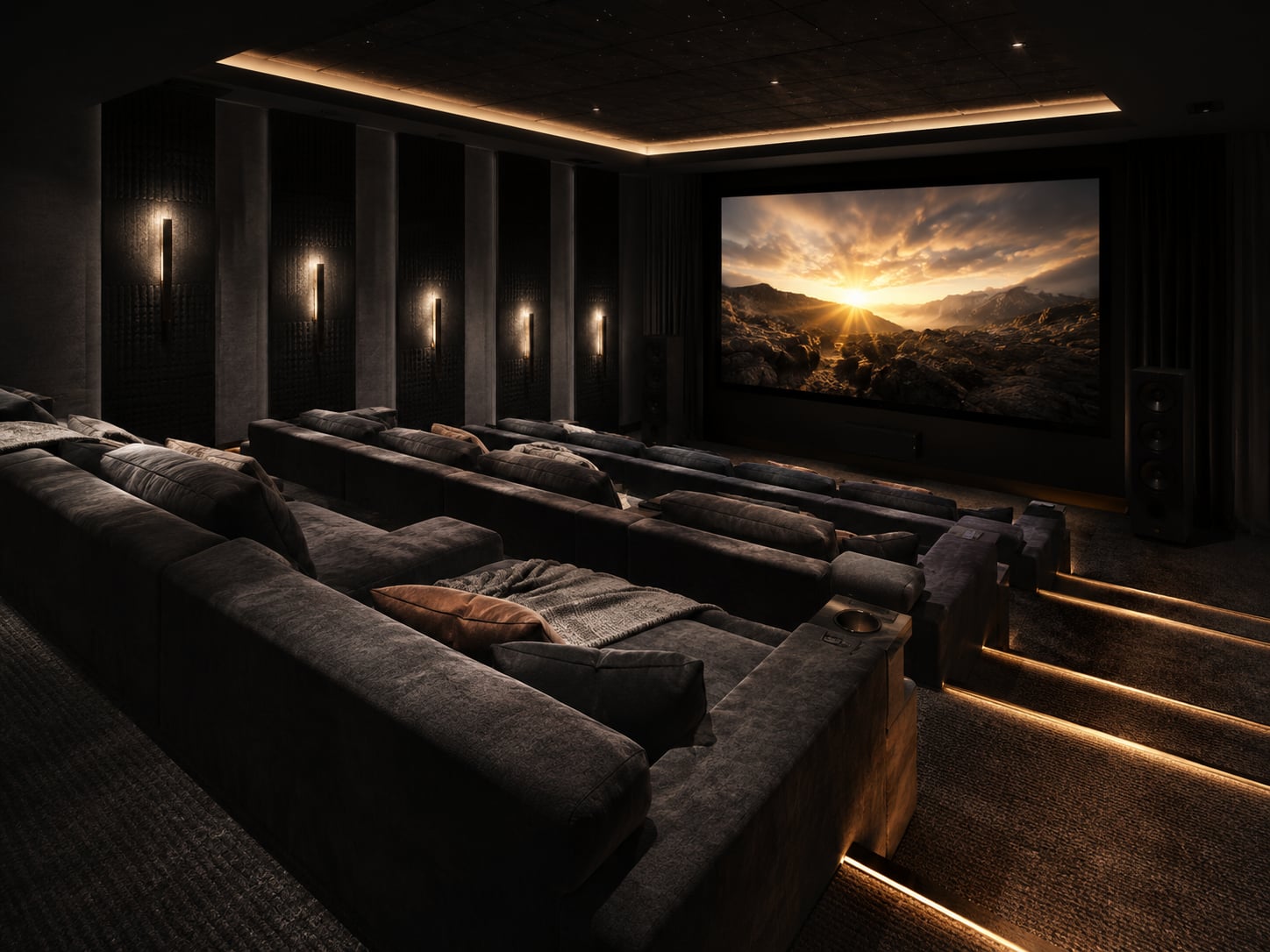
Picture it. The hallway dims behind you, the door closes, and the rest of the house falls away. No windows. No glow from the kitchen. Just the screen, the song, and the seat that knows your shape. A dedicated home theater is the one room in your house that exists for a single purpose — and it shows in every detail. Walls tuned to absorb and reflect at exact targets. A screen sized to fill the field your eye actually sees. Audio calibrated to reference using processors like JBL Synthesis or Trinnov. The room is the instrument.
We design and build dedicated theaters in homes across Preston Hollow, Southlake, Westlake, Colleyville, and the wider DFW metroplex. We start with the room itself — its bones, its dimensions, the ceiling, the throw, the seats. Equipment comes after, because the room shapes every choice that follows. We start with the room and build everything else around it.
Reference-Grade Picture, Precisely Specified
For most DFW theaters we lean on Sony and Epson — the two manufacturers that consistently deliver the picture you remember from your favorite cinema. The Sony VPL-XW7000ES gives you native 4K SXRD panels with laser illumination, 3,200 calibrated lumens, and a 20,000-hour light source — over a decade of regular nights with no lamp to swap. The Epson LS12000 brings 8K e-shift on native 4K D-ILA panels and the deepest native black levels you can buy in a residential projector.
For the dream room — the one you are still imagining — we move to Barco Residential Njord or the Sony GTZ380. These are commercial cinema engines tuned for the home: 10,000+ lumens, HDR tone mapping, the kind of image that makes the room go quiet. Screens come from Stewart Filmscreen on Future Automation hardware, with acoustically transparent options that let speakers fire through the canvas. Every projector is calibrated with a Murideo Seven generator and Portrait Displays CalMAN. Measured to reference, not eyeballed.
Immersive Surround Sound
Surround sound that does not sit flat against a wall — it circles you, settles overhead, and moves through the room with the picture. We start at 7.2.4 — seven ear-level speakers, two subwoofers, four overhead — and scale to 9.4.6 or larger when the room can carry it. Speakers come from Steinway Lyngdorf, JBL Synthesis, or Procella. Cinema-grade dynamics. Music-grade tone.
Processing runs through a JBL Synthesis SDP, Trinnov Altitude, or Datasat RS20i. We measure speaker response from every seat — not just the center chair — and let the room correction do its work. Subwoofers are placed by your room's modal behavior, tuned with REW and Multi-Sub Optimizer, so the bass lands evenly whether you are in the king seat or curled up on the end. Every seat sounds like the best seat.
From Drawing to Opening Night
Four phases. Design takes two to four weeks — drawings, equipment, acoustic modeling, a budget you can read. Construction follows: framing, acoustic treatment, electrical, low-voltage, finish carpentry. Four to eight weeks, depending on the room and the lead times.
Equipment installation and programming takes another week or two. Then the calibration session — the day the room comes alive. We tune the projector for SDR and HDR, set speaker levels and delays, run the room correction sweeps, dial in the immersive audio processor. The doors close. The lights fall. The first scene plays. From every seat in the room, it sounds and looks the way the director intended. Bring the wine.
The Questions People Actually Ask.
What room size do I need for a dedicated home theater?
Fifteen feet wide by twenty deep with a 9-foot ceiling is enough to seat two rows in front of a 130-inch screen with proper speaker placement. Larger rooms — 20 by 30 or beyond — open the door to 200-inch-plus screens, multiple rows, and far richer acoustics. We work alongside your architect to shape the space during design.
Should I choose a projector or a large TV for my theater?
For a dedicated room, projection is almost always the answer. A projector reaches 120 to 200+ inches. No television touches that. Pair it with a light-controlled room and a modern laser engine, and the contrast and brightness become cinematic. Large-format TVs like the Samsung 98-inch or LG 97-inch OLED earn their place in media rooms where ambient light is part of the story.
How important is acoustic treatment in a home theater?
It is the single most felt investment in your room. Without treatment, reflections smear dialogue, the soundstage collapses, and the bass turns boomy in some seats and dead in others. Treatment usually accounts for 10 to 20 percent of the budget — and changes the audio more than any single equipment upgrade you will ever make.
Can you build a home theater in my existing basement or bonus room?
Yes. Many of the dedicated theaters we build across DFW are conversions — a basement, a bonus room, a spare bedroom that finally found its purpose. We bring acoustic treatment, light control, ventilation, and the wiring it all rides on. With the right treatment and light control, almost any room can become a real theater.