The Brain of a Reference Theater
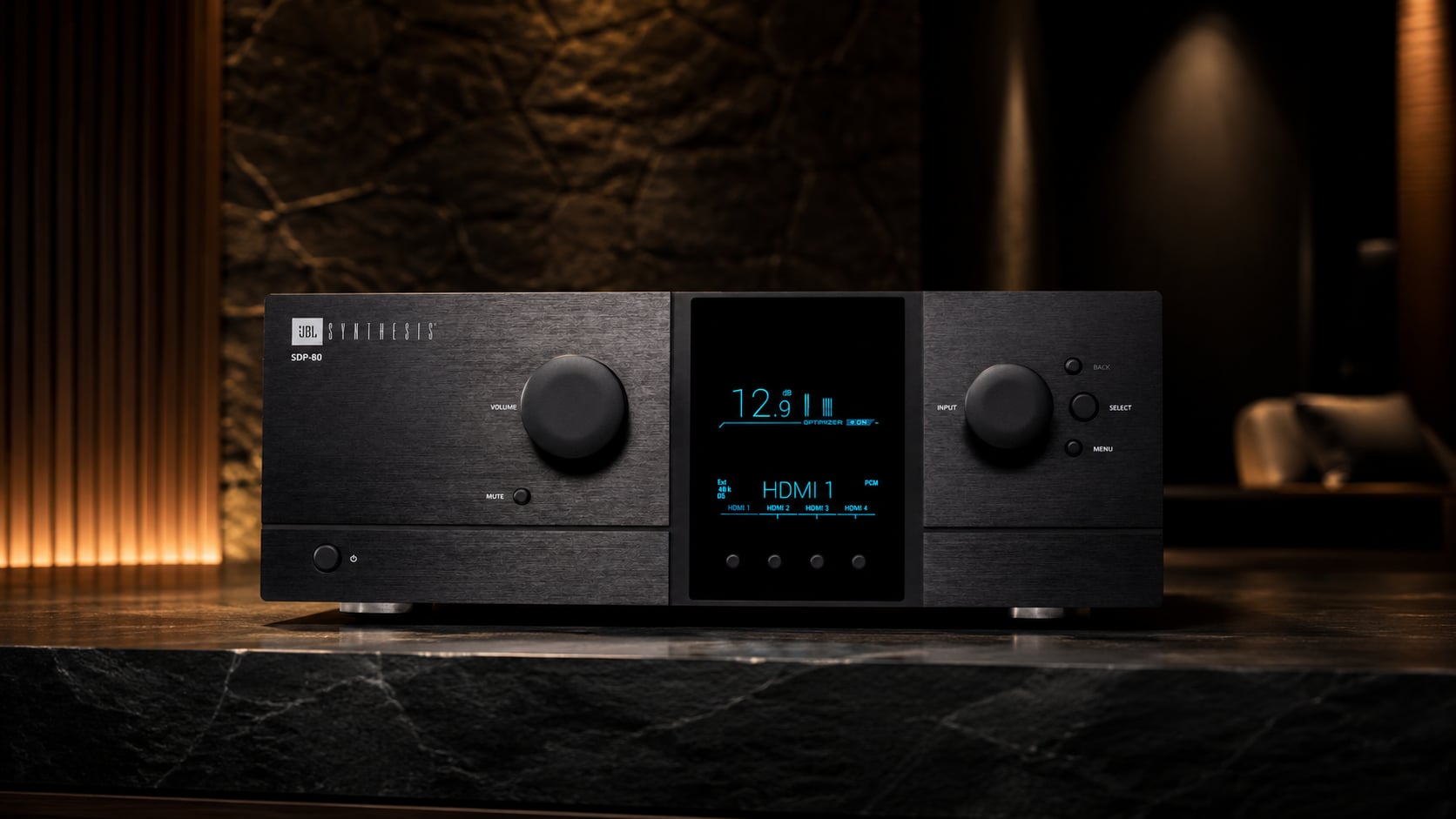
A great theater has three layers — the engine that throws the picture, the speakers that move the air, and the processor that decides what every channel does, what every seat hears, and how the room itself is corrected. The processor is the part nobody sees and the part that determines whether the room sounds like a movie or sounds like a stereo with extra speakers. JBL Synthesis builds the reference for that layer.
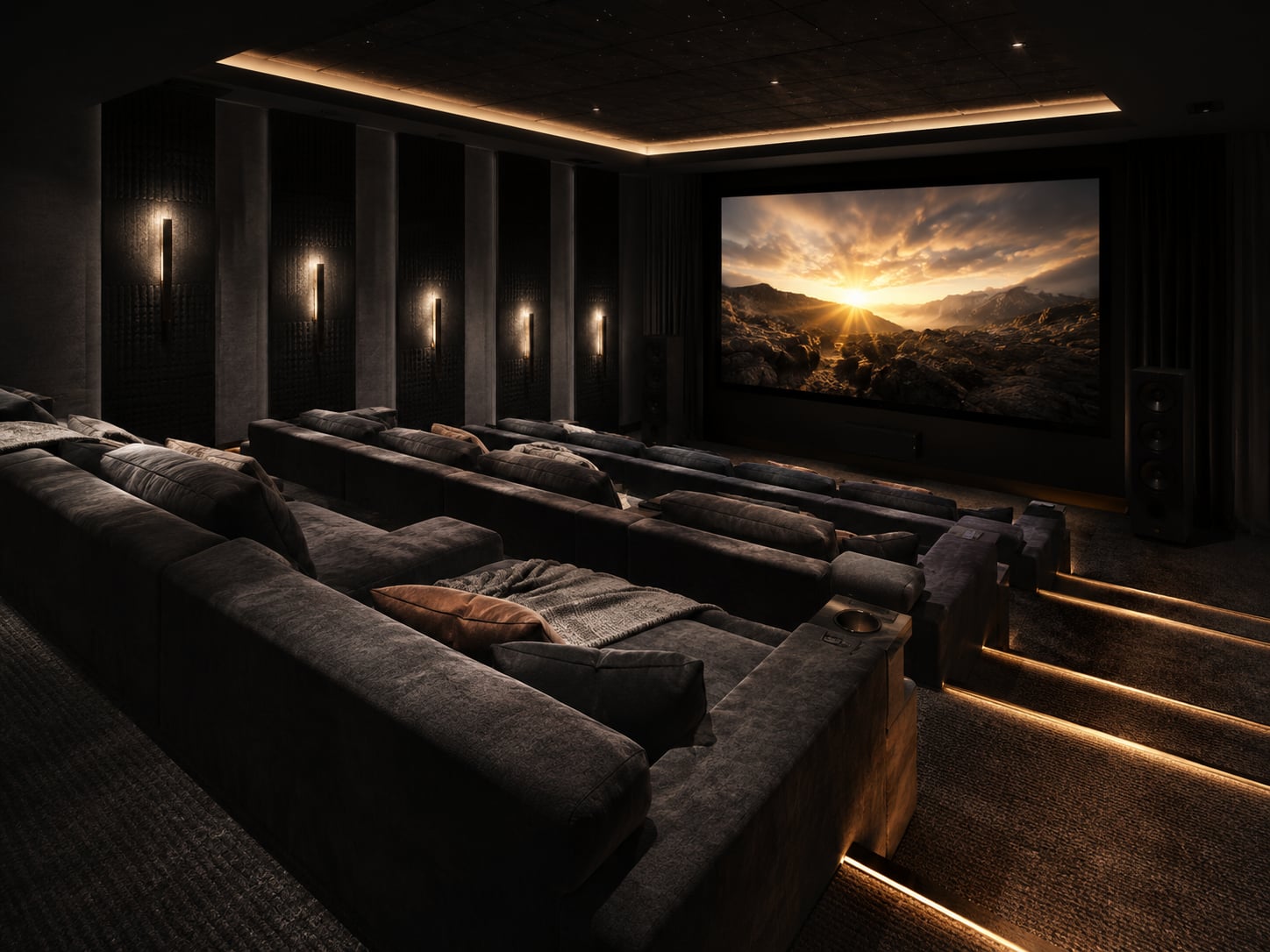
When you sit in a JBL Synthesis-driven cinema and the helicopter passes overhead, the sound moves through the ceiling in a single, continuous arc — not in handoffs between speakers, not with the dialogue suddenly thinning when the action drifts to the rear. The processor is reading 16 to 32 discrete channels, correcting each one for room response, and steering the sound field through the geometry of your specific room. The trick is that you do not notice the work. You only notice the film.
The Processors We Carry
The SDP-75 is the flagship — sixteen-channel processing native, expandable to thirty-two, with Trinnov Optimizer room correction built in and a dedicated DSP per channel. It handles Dolby Atmos, DTS:X, IMAX Enhanced, and Auro-3D natively. We specify it for the dedicated cinemas where the brief is true reference, paired with a Sony or Barco engine and a JBL Synthesis or Steinway Lyngdorf speaker complement.
The SDP-58 sits below it as a thirteen-channel processor with the same Trinnov correction engine and similar processing depth. The right answer for media rooms and smaller dedicated theaters where the channel count tops out at 9.4.4 or 11.2.4. The AVM 90 from Anthem — engineered alongside the JBL Synthesis line — gives you an Anthem Room Correction option in a 15.4-channel chassis at a more accessible tier, with the same processing pedigree.
Calibration, Integration, the Room Correction That Matters
A JBL Synthesis processor is only as good as its calibration. We run the full Trinnov Optimizer procedure with a calibrated 3D measurement microphone, taking impulse responses at every seat and several positions between. The Trinnov DSP then corrects the room's frequency response, time alignment, and modal behavior independently for each channel — pulling the bass nodes out of the room, aligning the surrounds to the precise listening position, smoothing the response curves to within a fraction of a decibel.
Then the processor disappears into Savant. Source selection, volume, listening mode, calibration target — all live in the same scenes that run the rest of the home. "Movie Night" wakes the projector, switches the processor to the Kaleidescape input, calibrates to the reference target, and brings the room to the volume you prefer. One button, and the room becomes a cinema.
The Questions People Actually Ask.
What makes JBL Synthesis different from a Denon or Marantz receiver?
Three things. Sixteen to thirty-two channels of true discrete processing — not virtualized. Reference-grade room correction through the Trinnov Optimizer or Anthem ARC. And a completely separated amplifier chain — the processor handles only decoding and correction, with no amplifier circuits sharing the power supply or chassis. The result is measurably lower noise floor and cleaner channel separation.
Do I need a separate amplifier with a JBL Synthesis processor?
Yes. The SDP-75 and SDP-58 are processors only — no built-in amplification. We pair them with JBL Synthesis or Crown amplifiers, typically with a dedicated channel of amplification per loudspeaker. For a 9.4.4 Atmos cinema, that means seventeen channels of amplification — a real piece of rack engineering, beautifully done.
How long does a JBL Synthesis calibration take?
A full Trinnov calibration runs four to six hours on-site, with a second visit a few weeks later to refine after the room has settled. We are not trying to set it and leave. The room correction is the difference between a good theater and a reference theater, and we treat it that way.
Can I run everything from one button?
Yes. Source, volume, listening mode, and the calibrated picture all live in the same Savant scene as the lights and shades. One press starts the film exactly the way it was set up — no menu, no remote juggling.