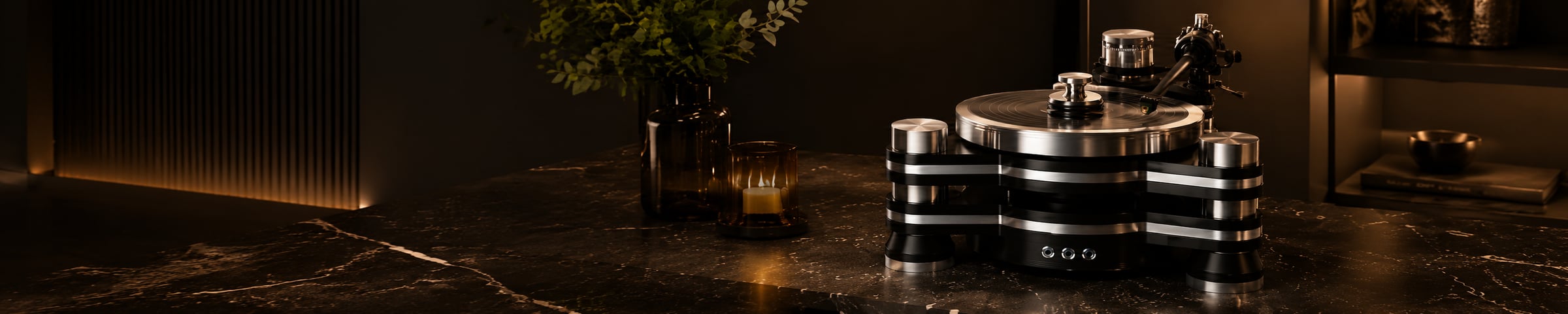
The Sound of a Steinway, Made for Your Room
Pour the bourbon. Drop the needle. The first thing a Steinway Lyngdorf system does is move the wall behind the loudspeakers somewhere else — somewhere wider, deeper, quieter than the room you have been listening in for years. The piano in the recording sounds like the piano in the recording. The breath before the singer's first note arrives whole. You sit forward a little, and the rest of the evening rearranges itself around that one chair.
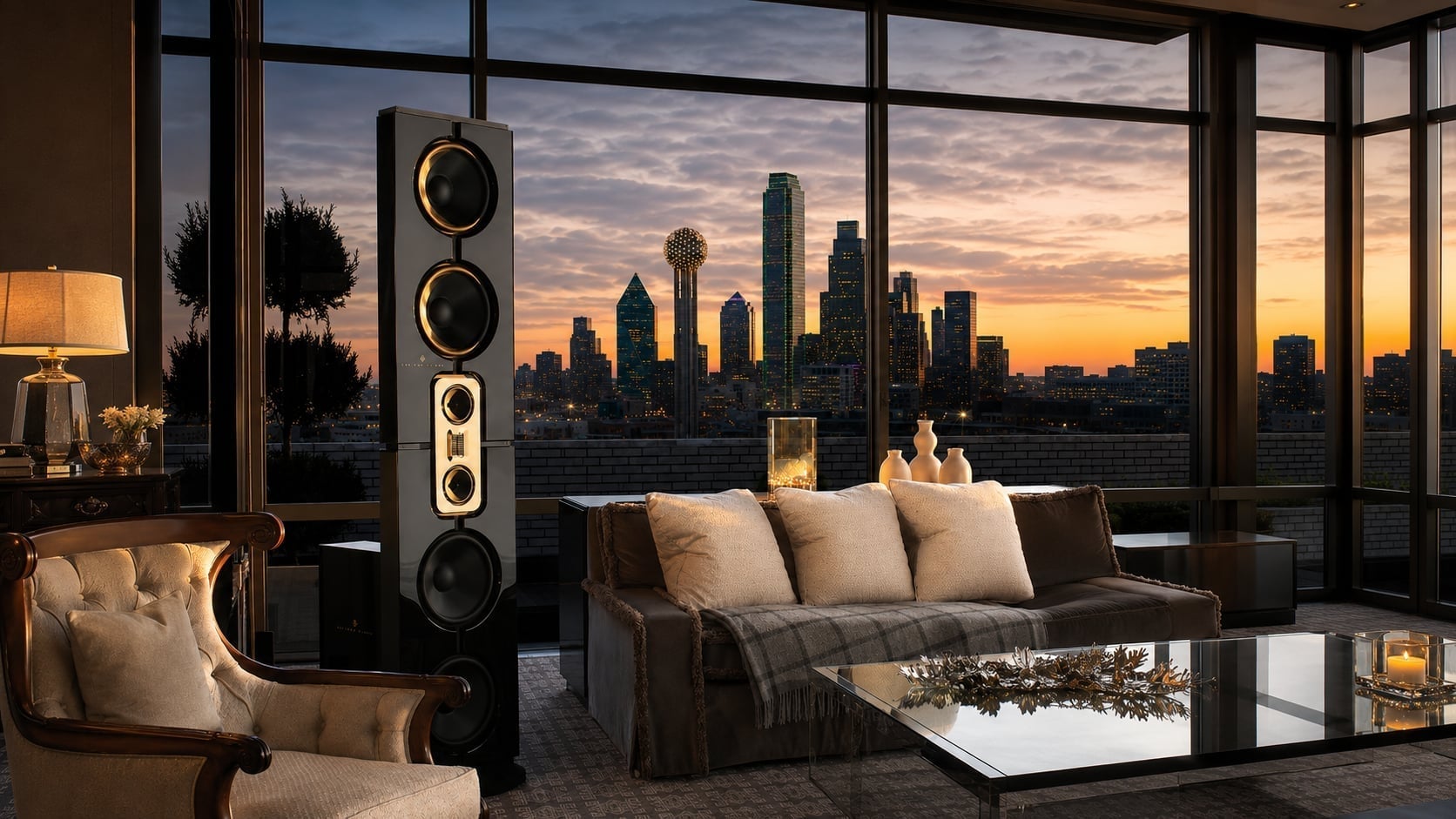
Steinway Lyngdorf builds loudspeakers from the same century of craft that produced its concert grands. Fully active systems with built-in amplification and digital signal processing — every component voiced together, nothing left to chance in the assembly of the rack. Paired with the company's patented RoomPerfect room correction, the speakers learn the room they sit in and correct everything the room is doing wrong.
How the Team Chooses the Model
We listen first to how you live in the space. A two-channel listening room off the study in Highland Park wants something different than a 28-foot reference cinema beneath a Vaquero great room. The Model D is the company's flagship — full-range floor-standing towers that can fill a 1,200-square-foot great room without ever sounding loud, only present. The Model M and Model A anchor reference cinemas and dedicated listening rooms with the bandwidth and dynamics of a small concert hall. Model S in-wall and bookshelf options carry the same voice into spaces where the architecture comes first.
Every Steinway Lyngdorf install runs into Savant for source selection, volume, and scene control. The right button on a kitchen keypad starts the dinner playlist on the in-wall pair in the dining room. A different button at the listening chair sends two-channel high-resolution audio to the Model D pair, lowers the lights to thirty percent, and closes the shades. The hardware does the heavy lifting. The interface stays out of the way.
Installation, RoomPerfect, and the Long Finish
For ground-up homes across Westlake and Southlake, we sit at the architect's table during framing. We plan the cable pathways, the dedicated electrical circuits, the room proportions, and the staggered-stud walls that drop the noise floor below thirty decibels — all of it before the drywall ever arrives. For existing homes, we work backward through the same checklist with conduit and careful millwork, leaving the room looking as if it was always meant to sound this way.
The final day is the longest day. We run RoomPerfect with calibrated measurement microphones at the listening positions, mapping the room's reflections, standing waves, and bass modes from dozens of points. The system builds a digital model of the room and then removes it from the signal. You sit down with us at the end, and we play the records you have lived with the longest — because that is the only honest test. Tuned by ear, on the music you know best.
The Questions People Actually Ask.
Is a Steinway Lyngdorf system worth it over conventional high-end audio?
For listeners who care about the recording itself — the room behind the band, the air around the singer — the answer comes through in the first record. The combination of fully active amplification, in-house DSP voicing, and RoomPerfect room correction does things in a Texas living room that traditional separates struggle to do in a treated lab. It is reference-tier audio, and it sounds like it.
How does RoomPerfect actually work?
RoomPerfect uses calibrated measurement microphones at the listening positions and several additional points around the room to build a digital model of how the room is coloring the sound. The processor then applies the inverse correction in real time, so what you hear at the chair is much closer to what the engineer mixed. It is the patented feature that lets the same loudspeakers sound exceptional in a glass-walled Frisco great room and a treated Preston Hollow listening room.
Can a Steinway Lyngdorf cinema also serve as a music room?
Yes — and this is one of the strongest arguments for the platform. The same Model D or Model M speakers that anchor an immersive surround sound cinema also perform exceptionally for two-channel music. We program two distinct scenes — Cinema and Listening — that reconfigure processing, surrounds, lighting, and shades for each use.
How does it integrate with the rest of the Savant home?
Cleanly. Source selection, volume, mute, and scene recall all live inside Savant alongside the rest of the home. A keypad in the kitchen can start the dining room pair. The listening chair has its own dedicated panel. The same app that controls the lighting controls the music — one interface across the entire home.