Why the LS12000 Became the Workhorse
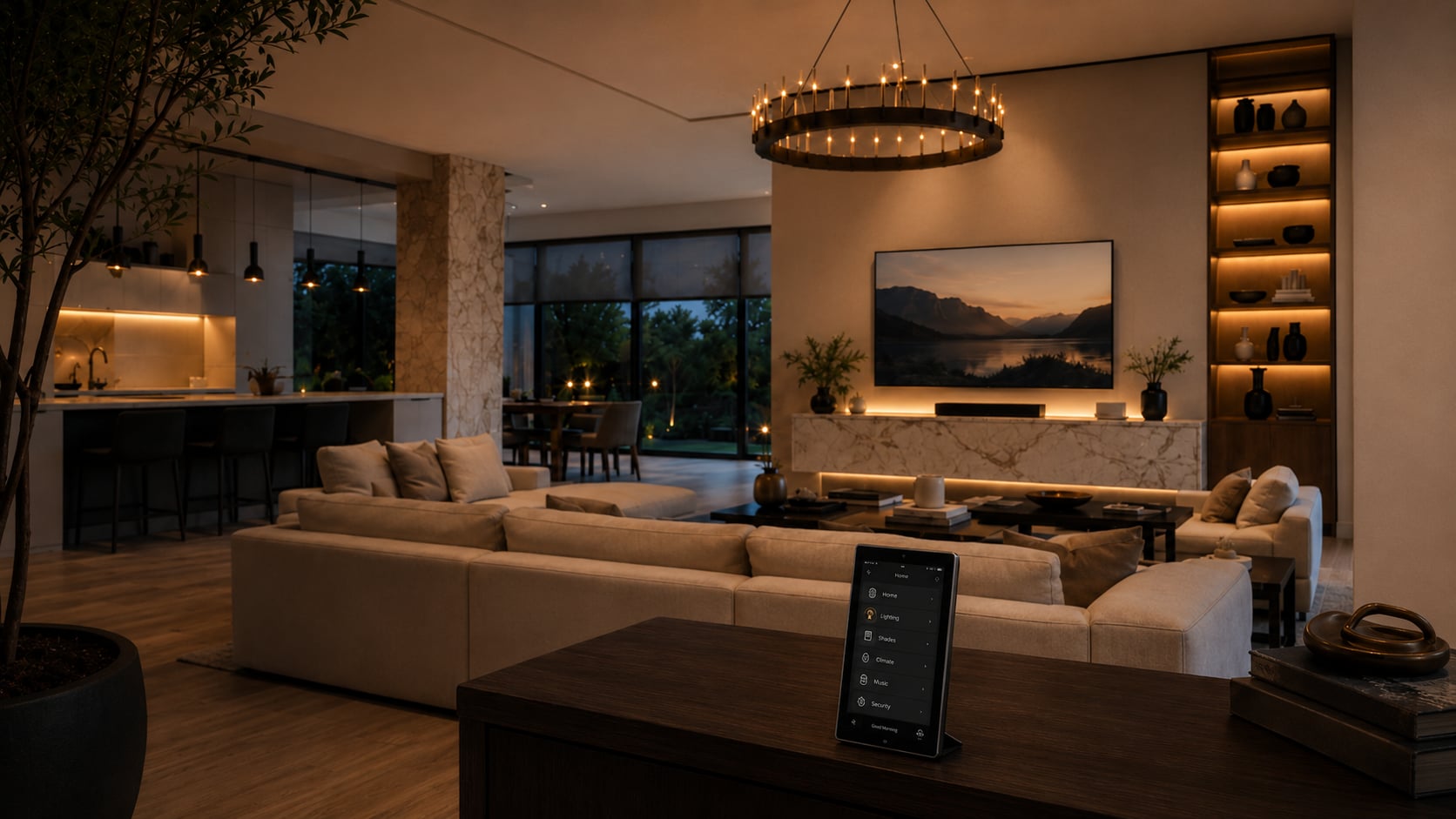
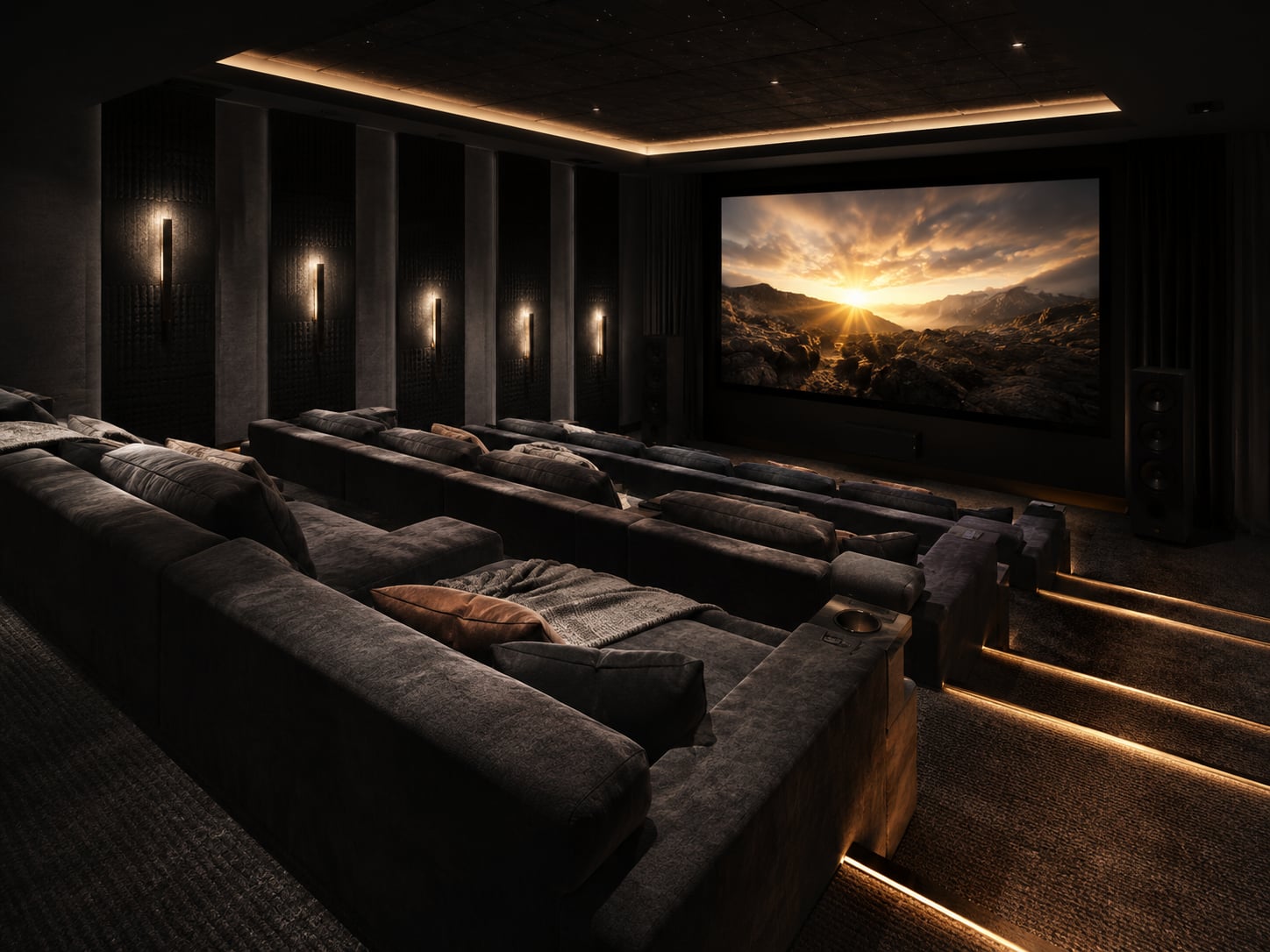
A Friday evening in Frisco. Family on the sectional, popcorn in the bowl, the new Dune disc loaded. The Epson LS12000 throws 2,700 ANSI lumens onto a 130-inch screen and the room does not need to be a vault to enjoy it. The pixel-shifted 4K is sharp enough to read every grain in the spice-laden Arrakis wide shots. The blacks hold. The color leans warm in the right way.
Epson built the LS12000 as the new floor for cinema-grade laser projection — and quietly redefined what an entry-level pro engine looks like. We specify it more often than any other projector across DFW media rooms because the price-to-performance is honest. The picture does not apologize for itself.
The Epson Line We Carry
The Epson Pro Cinema LS12000 is the centerpiece — 4K PRO-UHD pixel-shifting, three-chip LCD design (no rainbow artifacts), HDR10+ and HLG support, and a 20,000-hour laser engine. We pair it with a 120 to 150-inch screen in dedicated and dual-purpose rooms across Southlake, Colleyville, and Plano. The Pro Cinema LS11000 sits just below it for clients who want the engine without the latest HDR processing.
For media rooms where ambient light is real and a short-throw install is the answer, the Epson LS800 throws a 120-inch image from less than ten inches off the wall — 4,000 lumens, a built-in Android TV interface, and a profile that hides behind a media console. Not a reference theater engine, but the right answer for a great room or a basement play space where a long-throw projector simply will not fit.
Calibration, Mounting, and the Room It Lives In
Epson runs honest out of the box and rewards calibration generously. Our ISF-trained technicians bring the LS12000 to reference for both SDR and HDR — grayscale, gamut, EOTF, dynamic tone mapping — and store the profiles to dedicated picture memories. Day mode for ambient viewing. Night mode for the room with the shades down. One button on the Savant remote brings the right one up.
The install itself is straightforward. Ceiling mount with vibration isolation. Fiber-optic HDMI for runs past fifty feet. Power and signal disappear into the ceiling cavity. We measure throw and lens shift before drilling a single hole, then aim and lock the geometry once. After that, the projector sits where it sits — quietly, for the next two decades.
The Questions People Actually Ask.
Is the Epson LS12000 truly 4K?
It uses pixel-shifting on a 1080p three-chip LCD panel to deliver a true 4K image on screen — 8.3 million distinct pixels resolved per frame. Side-by-side with a native 4K Sony, the difference is real but small. The Epson trades a tiny amount of pixel-level acuity for substantially better black levels and a much friendlier price.
How does Epson handle HDR?
The LS12000 supports HDR10, HDR10+, and HLG with dynamic frame-by-frame tone mapping. After calibration, HDR content holds extraordinary specular detail and shadow nuance. Epson's HDR processing has matured considerably in the LS12000 generation and is genuinely competitive with anything in its tier.
Will the Epson work in a room with windows?
With motorized blackout shades managed by Savant, yes — beautifully. Without light control, the 2,700-lumen engine still holds a watchable image on an ALR screen in moderate ambient light, but the picture truly opens up when the shades come down. We design the room and the light control as one system.
Epson or Sony for my room?
If the room is fully blacked out and the goal is the deepest possible shadow detail in HDR cinema, Epson is the call. If the brief is reference color, native 4K silicon, and the cleanest possible image from a smaller, quieter engine — Sony. We walk both options with you before either lens points at a screen.