The Light Inside the Architecture
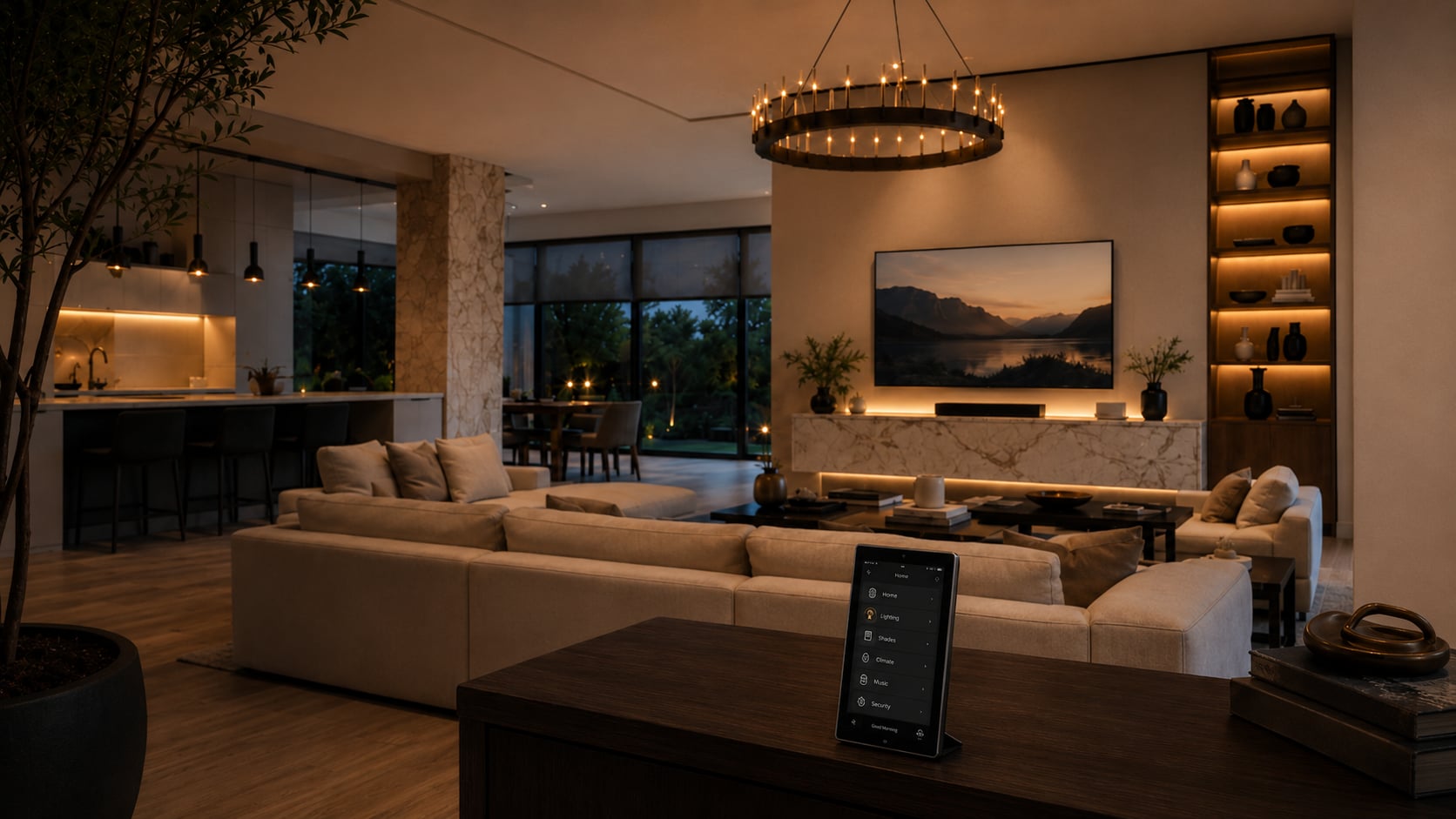
Look up at a softly glowing cove over a Highland Park dining room ceiling and the light seems to come from the architecture itself. Run a hand under the floating vanity in a Southlake primary bath, and the warm wash on the stone floor seems to come from the cabinet, not from a fixture. That entire category of lighting — invisible source, visible result — is built on linear LED profiles. KLUS makes the best of them.
The Polish house has spent twenty years engineering aluminum extrusions designed specifically to carry LED tape: cove profiles for ceiling perimeters, cabinet profiles for the underside of millwork, stair profiles for risers, recessed plaster-in profiles for sharp architectural lines, corner profiles for the inside angle where two walls meet. The aluminum manages heat and adds rigidity. The diffuser options — frosted, satin, prismatic — turn a row of LED dots into a smooth, even line of light. The fixture is the architecture. The light is everywhere.
Where KLUS Earns Its Keep
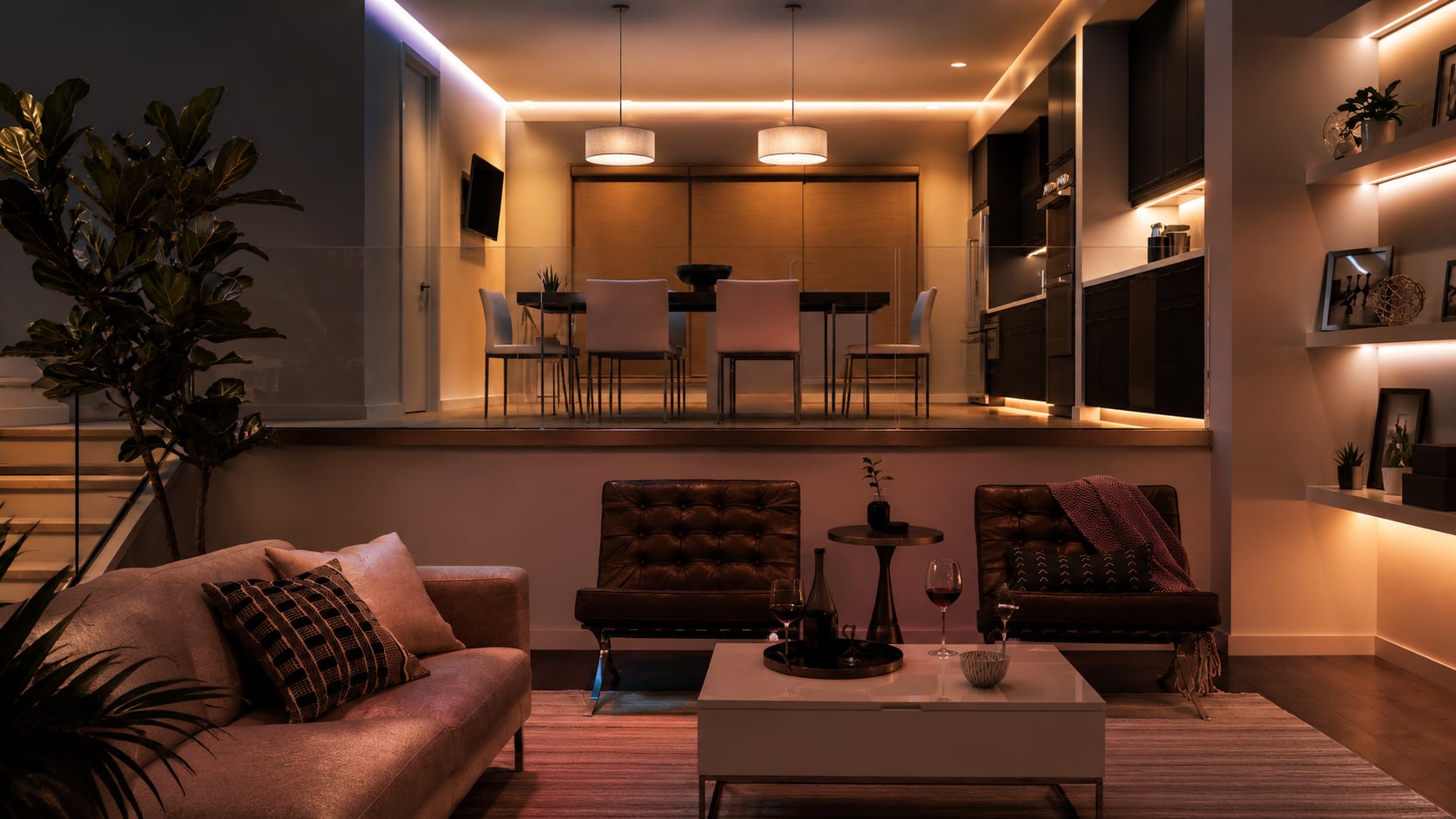
Cove lighting is the most familiar use — a continuous line of warm light along the perimeter of a great room ceiling, washing the architecture and lifting the room without a single visible source. KLUS cove profiles install above crown molding, into purpose-built coves, or recessed flush into the ceiling itself. Paired with Savant Lighting dimming, the cove dims down to a near-candlelight glow for the late evening and lifts to a brighter daylight wash for daytime use.
Under-cabinet lighting in the kitchen is the second high-value use — KLUS cabinet profiles tuck into the underside of upper cabinets and wash the countertop with even, glare-free task light. Stair runs and library shelving get their own profile family. Recessed plaster-in profiles deliver the cleanest detail in the catalog — a thin line of light set into the plaster of a wall or ceiling, finished flush, visible only as light. All of it dims and color-tunes through Savant alongside the rest of the home's lighting fabric.
Specification, Coordination, and Install
KLUS is a millwork conversation as much as a lighting conversation. We work with the cabinetmaker, the drywall contractor, and the trim carpenter to integrate profiles cleanly during construction. Cove dimensions get specified during the ceiling design. Cabinet routing for the linear profiles gets cut at the millwork shop, not on-site. Stair profiles install during the riser fabrication. The result is a finished detail that looks as if it was always part of the architecture.
For the LED tape itself, we specify high-density, high-CRI strips in the color temperature that fits the room — warm 2700K for primary living spaces, tunable Ketra spectrum in rooms that benefit from a circadian rhythm. Drivers live remote in the network rack or a nearby low-voltage cabinet, dimming through Savant Lighting on 0-10V or DALI control. The diffuser is chosen by application — frosted for the smoothest line, satin for slightly more transmission, prismatic for the rare case where the light needs to throw further. The line clean, the source hidden, the light doing the talking.
The Questions People Actually Ask.
Why use KLUS profiles instead of just running LED tape directly?
Bare LED tape stuck to a surface fails three ways — it overheats and dies early, it shows visible diodes as dots rather than a continuous line, and it has no protection from dust, fingers, or moisture. KLUS profiles solve all three. The aluminum extrusion manages heat, the diffuser smooths the light into a continuous line, and the channel protects the tape itself. The cost difference over the life of the install is minor. The quality difference is significant.
Can KLUS lighting be installed in an existing home?
Yes, with care. Cove and under-cabinet applications are the most retrofit-friendly — both can be installed without opening walls or rebuilding millwork. Recessed plaster-in profiles are best in new construction or a major renovation, since they require opening and refinishing the ceiling or wall surface. We tell you straight what is possible in your specific home during the site walk.
How does KLUS integrate with Savant lighting?
KLUS profiles carry standard high-CRI or tunable LED tape, which is driven by remote drivers controlled by Savant Lighting on 0-10V, DALI, or DMX depending on the application. From the scene-programming side, KLUS coves and under-cabinet lighting behave exactly like any other lighting zone — they participate in every scene, every schedule, and every circadian rhythm the rest of the home runs on.
Are the profiles visible after install?
Almost never. Cove profiles sit hidden above crown or recessed into the ceiling. Cabinet profiles tuck into routed grooves on the underside of millwork. Stair profiles set into the riser. Recessed plaster-in profiles finish flush with the surface, visible only as a thin slot of light. The intent is invisible source, visible light — and the catalog is engineered around exactly that goal.