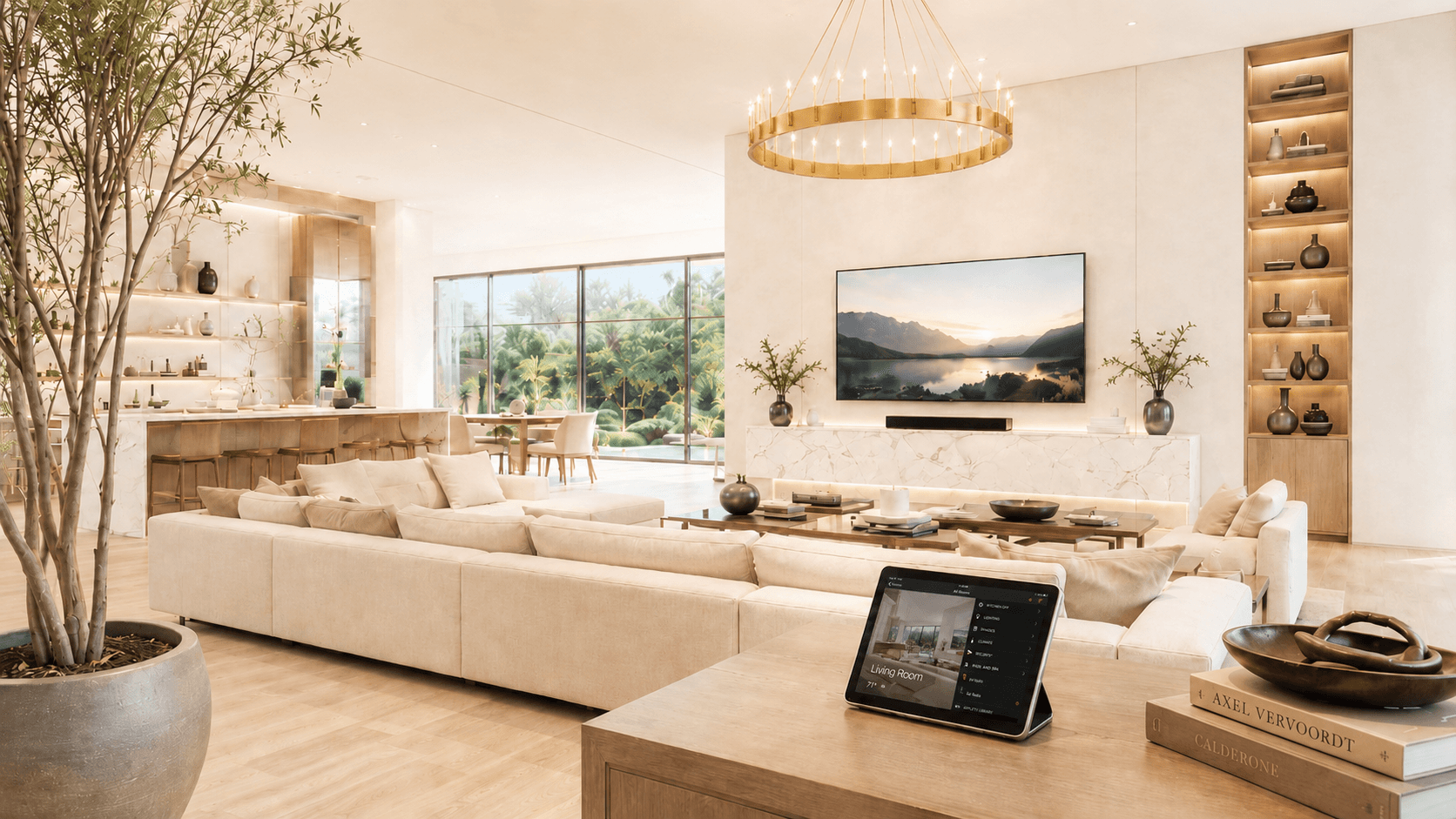
The Quiet Foundation
Every beautiful thing in a smart home — the music that finds you in the kitchen, the lights that ease into the evening, the cameras that quietly watch the gate — sits on top of a network. If the network is not right, none of the rest is right. Fort Worth's luxury homes are large, complicated, and full of devices that overwhelm the consumer router that came in the cardboard box. We deploy enterprise gear from enterprise-grade because a six-thousand-square-foot Tanglewood home with fifty connected devices is closer to a small office building than to a studio apartment, and it deserves to be designed that way. Site survey. Heat map. VLANs. Managed switches. The unglamorous work that makes everything else feel effortless.
Fort Worth's older neighborhoods do not give up signal easily. Rivercrest brick walls and plaster interiors quietly eat WiFi the way a velvet curtain eats sound. Westover Hills mid-century homes on slab give you no crawlspace and ask for clever attic routing. Mira Vista and Montserrat estates with detached pool houses and casitas need point-to-point bridges or buried fiber to reach the corners of the lot. We solve these in the design, before a single wire goes in, instead of throwing repeaters at a problem that needs an actual answer.
The Frustrations We Hear Most
- Dead zones in master bedrooms, home offices, and back patios because the house is large and the construction is unfriendly
- A consumer mesh that wants a reboot every Sunday and never quite catches up
- No wired Ethernet at the TVs, the office, the gaming room — every important device on the same overworked WiFi
- IoT, family phones, guest devices, and security cameras all on one flat network with no segmentation and no security
How We Do It in Fort Worth
Site Survey & Heat Mapping — We walk the property with spectrum analysis, map signal strength through every wall and floor, and find the interference your old router has been quietly losing to.
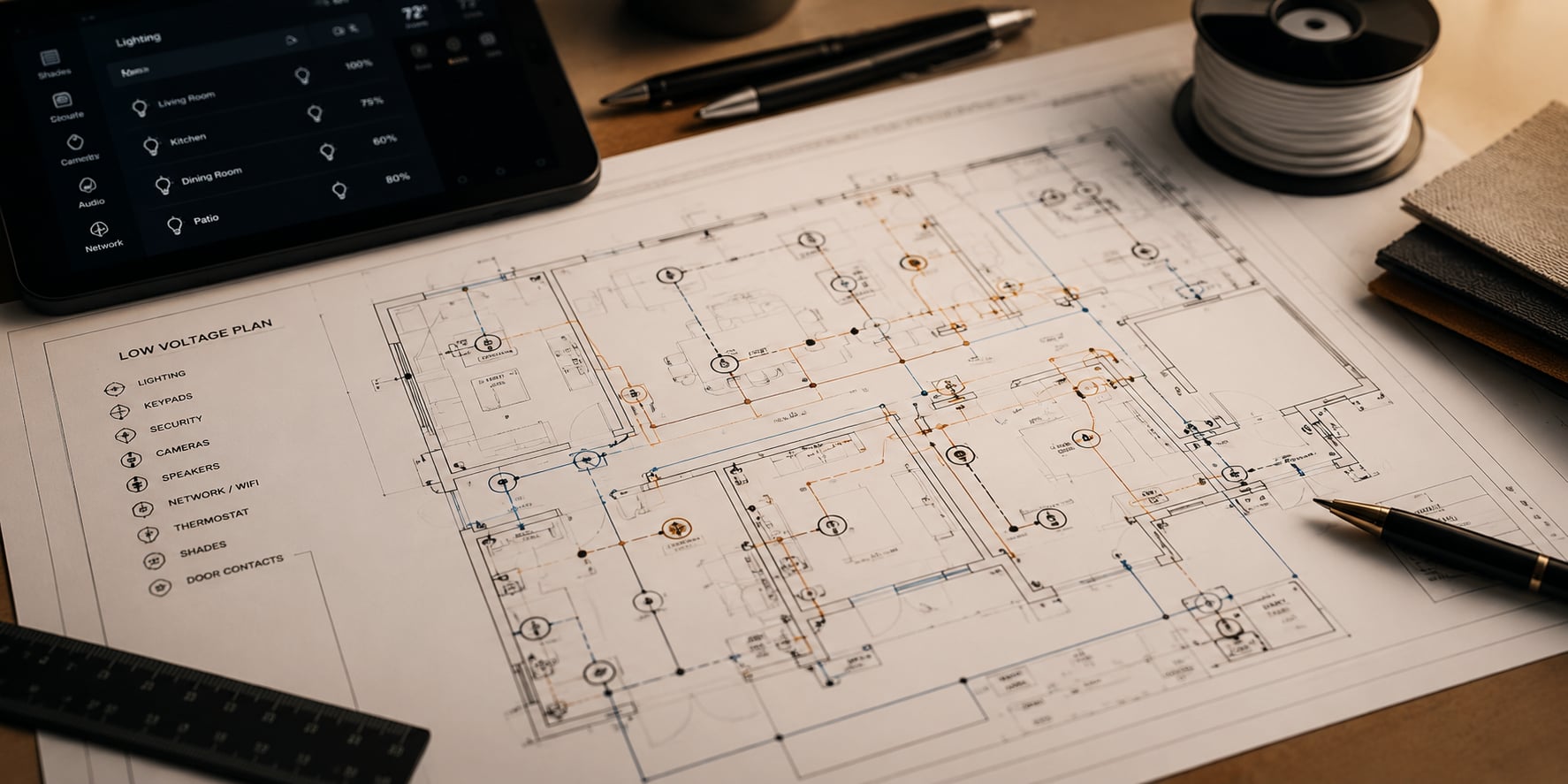
Network Architecture — A custom design with access point placement matched to your construction — brick, plaster, stone, frame — plus VLAN segmentation, switch topology, and a real rack.
Structured Cabling — Cat6A and single-mode fiber to every access point, TV, office, and camera position. In an older Fort Worth home, we use attic routing and exterior conduit so the walls stay quiet.
Equipment Installation — enterprise-grade access points placed where the survey said they belong, managed PoE switches in the rack, and cable management you would actually want to look at.
Configuration & Security — VLANs separating IoT from personal devices and guest traffic, firewall rules in place, DNS filtering, QoS for streaming and conferencing, and secure remote access.
Verification & Documentation — Speed tested in every room and outdoor zone, full network documentation handed over — IP map, VLAN map, password vault — so the house has a real record.
Who We Help in Fort Worth
- You live in Rivercrest or Westover Hills and your WiFi has dead zones the masonry has been winning for years
- You own a Mira Vista or Montserrat estate and the network needs to reach the pool house, the casita, and the back fence line
- You work from home on video calls that cannot afford to stutter
- Your house has 40+ connected devices and the consumer mesh has been quietly losing for months
- You are pre-wiring a Clearfork new build and you want Cat6A and fiber in the walls before they close
The Questions People Actually Ask.
Why does the consumer mesh keep losing in my Tanglewood home?
Eero, Google WiFi, Orbi — they all use radio backhaul between nodes, which means each hop cuts your bandwidth roughly in half. In a six-thousand-square-foot home with three or four nodes daisy-chained, the farthest one is delivering a fraction of your actual internet. Then forty connected devices climb on top and the result is buffering, dropouts, and the Sunday reboot. Enterprise systems wire the backhaul to every access point, so each one delivers full bandwidth on its own.
Can you reach the pool house without trenching?
Yes. We deploy point-to-point wireless bridges from enterprise-grade or Cambium that create a dedicated high-bandwidth link between the main home and the detached structure. Sixty-gigahertz links, near-fiber speeds, invisible once they are in. For Mira Vista and Montserrat properties where conduit is already buried for landscape lighting or pool equipment, we prefer fiber for the reliability and the headroom.
What is VLAN segmentation and why do I want it?
It splits your single physical network into isolated virtual ones. We typically build four — personal devices, IoT, security cameras with their own bandwidth, and guests. A compromised IoT device cannot reach your personal files. A guest cannot see your cameras. Your cameras' upload traffic stops fighting your kids' streaming. Four lanes, four jobs, no collisions.
How many Ethernet drops do I really need?
At least two Cat6A drops at every TV, four in each office, two at every access point, and one per camera. A typical Tanglewood or Arlington Heights home lands at forty to sixty. A Mira Vista or Montserrat estate with multiple structures and home offices for two working adults runs eighty to a hundred and twenty. Running extra drops while the walls are still open costs almost nothing. Adding them later costs everything.