When the Room Asks for Cinema
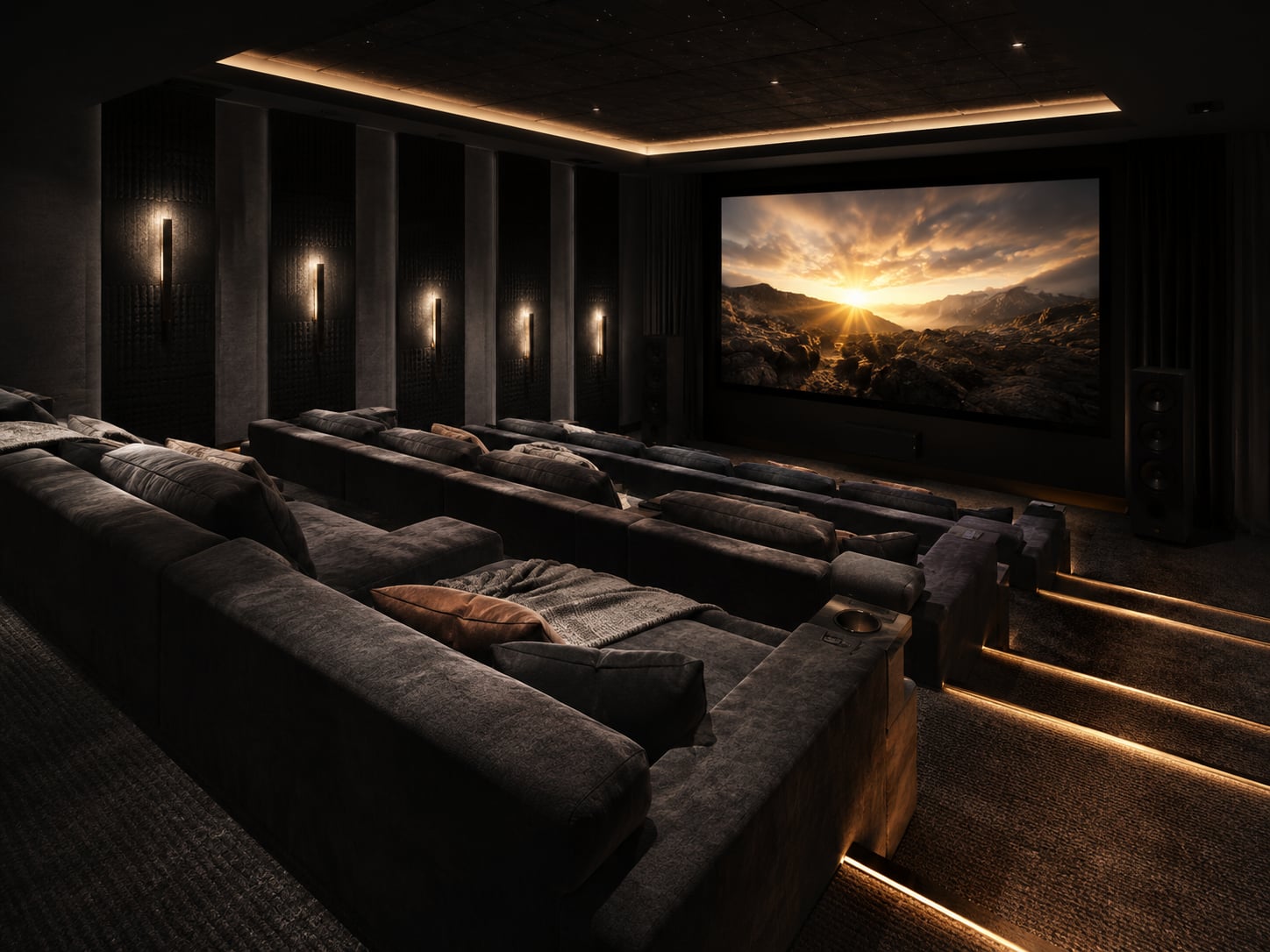
A dedicated theater in a Westlake estate. A 200-inch acoustically transparent screen. Twelve Fortress seats in two tiered rows. A JBL Synthesis processor running Atmos through twenty-two channels. The projector hanging in the dark behind glass is a Barco Njord. The image it throws holds full brightness on a screen the size of the back wall — the same engine, with the same calibration, that the colorist used to grade the film three months earlier in Los Angeles.
Barco does not make projectors that are good for the money. Barco makes the reference. Their residential line is the same three-chip laser DLP architecture that powers commercial cinemas worldwide, repackaged for the home with whisper-quiet cooling, residential HDMI inputs, and a finish that does not look like rack equipment.
The Barco Line We Specify
The Bragi sits at the entry to Barco Residential — three-chip laser DLP, native 4K, 2,200 to 2,700 lumens depending on configuration. For dedicated theaters up to 160 inches in fully light-controlled rooms, it delivers an image that no single-chip engine can quite match. Color uniformity edge to edge. Black levels that hold. The DLP chip set running at native 4K with no shift artifacts.
The Njord is the dream tier. Three-chip laser DLP, native 4K, scaling to 38,000 lumens in the largest configurations. We specify it for 200-inch and larger screens where no other engine carries enough light to fill the frame at HDR specification. Installations land in dedicated cinemas across Preston Hollow, Vaquero, and Montserrat — usually with a budget conversation that begins and ends with "build it right."
Installation, Cooling, and the Hidden Engineering
A Barco install is a different category of project. The projectors run heavier, dissipate more heat, and demand purpose-built rooms. We coordinate with the architect during design — projection booth dimensions, dedicated cooling, isolation glass, sound-rated wall construction between the booth and the theater. Power requirements often include a dedicated 30-amp circuit and conditioned power through a Torus toroidal isolation transformer.
After the engine is mounted, Barco-certified calibration runs over multiple sessions. We use the projector's internal sensors with external pattern generators and reference colorimeters to align white point, color gamut, gamma, and HDR tone mapping to DCI specification — the same standard used in commercial release. The result is a picture that holds the colorist's intent in the room you watch it in. Calibrated to DCI spec, in the room you actually watch in.
The Questions People Actually Ask.
Is Barco worth the investment over Sony or Epson?
For the right room — a true dedicated cinema with a screen 150 inches or larger and a fully built-out projection booth — yes. The Barco engine delivers brightness, color uniformity, and reliability that single-chip residential projectors cannot match. For a media room or a 120-inch dedicated theater, Sony or Epson is the more honest answer.
How long does a Barco residential install take?
Three to six weeks from delivery to commissioning, longer if the room is part of new construction. The projector itself installs in a few days. The calibration, room treatment, and integration with Savant and the processing chain take the rest of the time. We never rush this category of project.
Does Barco require a separate projection booth?
Strongly preferred. The larger Njord configurations generate enough fan noise and heat that an isolated booth with dedicated cooling is the right answer. The Bragi is quieter and can mount in-room with proper ventilation, but a booth still delivers the best result. We design the room around the engine, not the other way around.
Who else has installed Barco residential in DFW?
The list is short. These engines live in perhaps a few dozen homes across the Metroplex — reference rooms in Highland Park, Westlake, Vaquero, and a handful of estates in Fort Worth. We have installed and calibrated several of them. Tell us about the room you have in mind.